09 September 2026
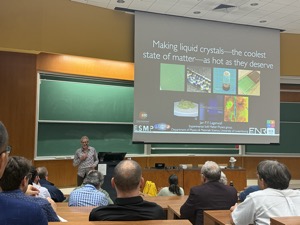
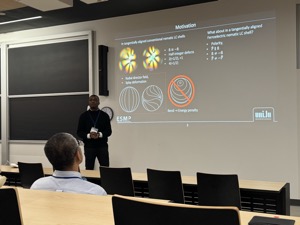
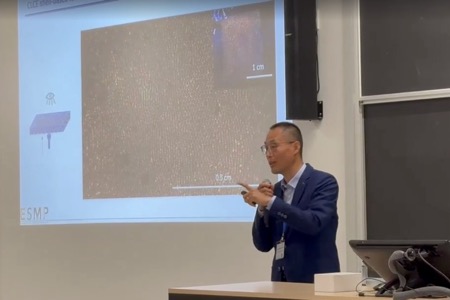
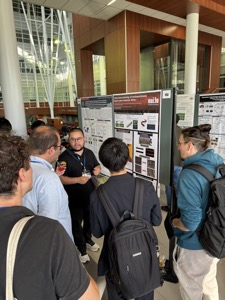
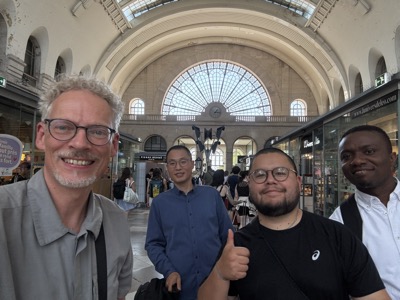
For the second workshop (and fourth official meeting) of the ALCEMIST project, a number of us in ESMP as well as related other projects visited Eugene Terentjev's group at the University of Cambridge in the UK!

photo courtesy of Yosuke Pestana Nakamura
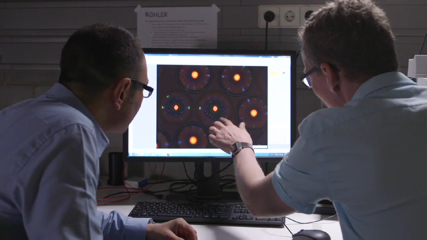
Along with our collaborators in Cambridge and at NOVA University of Lisbon, we presented our current/recent work and caught up with our collaborators.


photo credits: Miriam Fischer
In addition to the scientific discussions, we also took the opportunity to enjoy Cambridge and the surroundings, including the customary visit to a British pub.


Overall, it was a productive and informative visit, and we're looking forward to what's to come next in the ALCEMIST project!
/LWH/
06 July 2026
Congratulations to Jan and to our collaborators in
Frank Gießelmann's group at the University of Stuttgart and in Per Rudquist's group at Chalmers University of Technology for their latest publication in
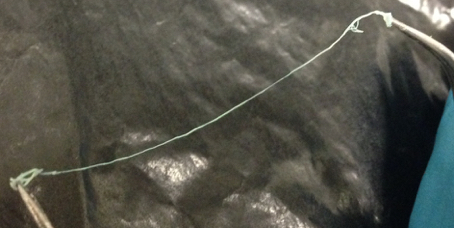
npj Soft Matter, "Electrospun fibers with axially polarized ferroelectric nematic core"! A combination of our longstanding electrospinning work with the exciting and emerging world of ferroelectric nematic liquid crystals, this work reports on the results of electrospinning polymer fibers containing a ferroelectric nematic liquid crystal core. The unique properties of ferroelectric nematics suppress the onset of Rayleigh–Plateau instability, giving rise to very easy, continuous filling and unusual behavior in the fibers.
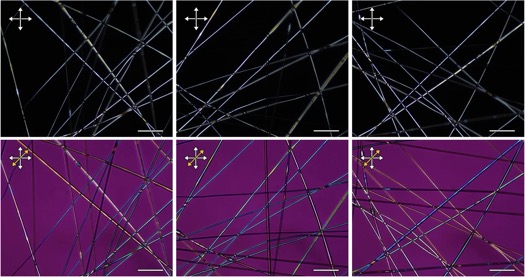
The article is open access and free to read. Congrats again to the team!
/LWH/
28 May 2026
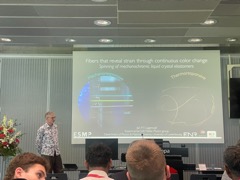
This past week, Jan and Amina attended this year's Fiber Society conference at EMPA in St. Gallen, Switzerland! Jan presented on some of our work on mechanochromic liquid crystal elastomers while both Jan and Amina enjoyed networking and the beautiful surroundings of northeastern Switzerland.
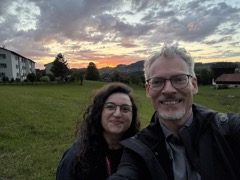
/LWH/
13 May 2026
On 13 May, the
Section des Sciences of the
Institut Grand Ducal, a learned society of the Grand Duchy of Luxembourg, inducted its latest full members, including Jan! We had a short reception where Jan and the other inductees (from the University of Luxembourg) were presented and got the chance to briefly present about their research. Naturally, there were some practical demonstration aids brought for the occasion, covering a few of our ongoing projects.
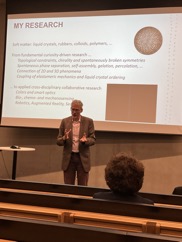
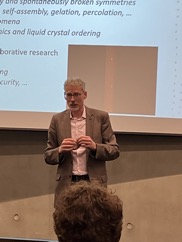
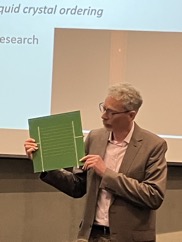
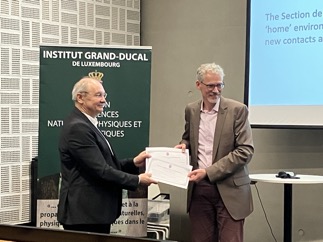
Häerzlech Gléckwonsch, Jan!
/LWH/
20 April 2026
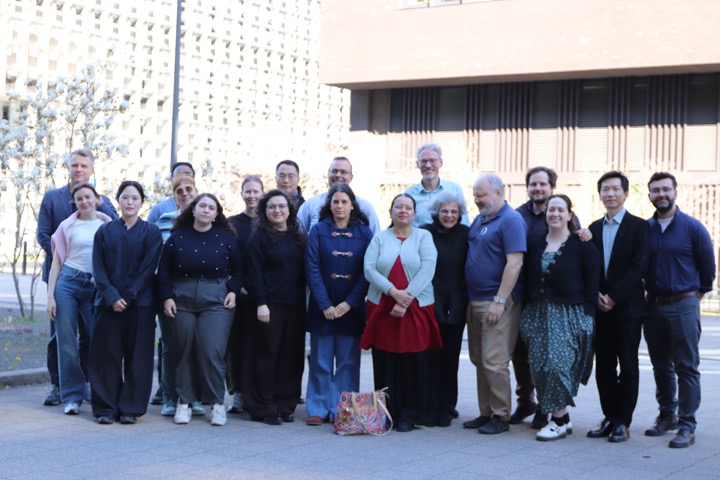
On 7 April, we in Luxembourg hosted the second ALCEMIST workshop! We welcomed our collaborators from the University of Cambridge and NOVA University of Lisbon as well as some of our other partners and collaborators (Apala Majumdar from the University of Manchester and Attila Dubecz from Helios Klinikum) to discuss the current state of the many prongs of the ALCEMIST project. Not only was it nice to bring the whole team together physically (including our newly joined ALCEMIST team members), but we also enjoyed glorious spring weather for the occasion.
/LWH/
09 March 2026
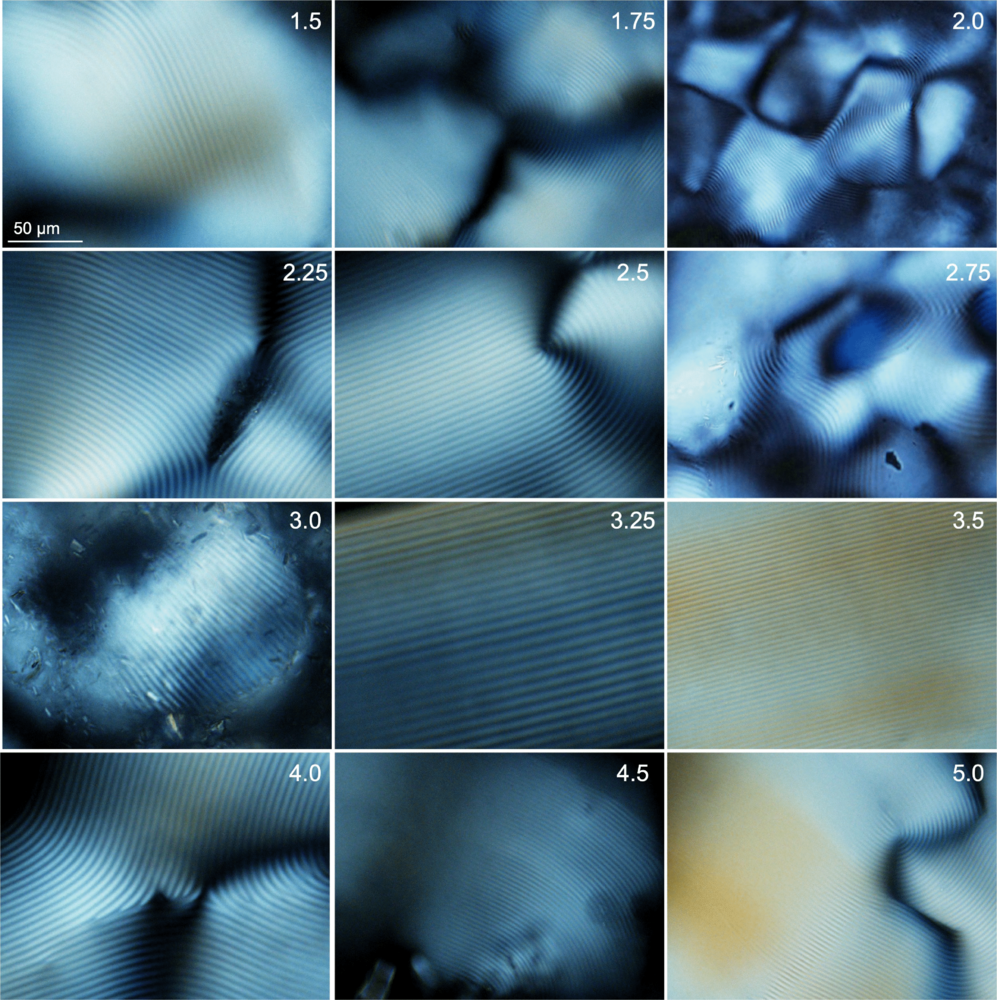
Congratulations to Zory and Jan on their latest publication, "Orientational ordering benefits nanorod sonication", which
went online today in Physical Review Materials! A work very long in the making, this is a systematic study of the interplay between sonication and ordering in suspensions of rods (in particular, the cellulose nanocrystals we use) and how phase transitions ultimately affect the behavior of the suspensions (even after returning to the "original" state).
The article is free to read (and download) online.
/LWH/
30 January 2026
Congratulations to ESMP alumna Deniz Avşar and ESMP overlord Jan on their newest publication in
Advanced Optical Materials, "
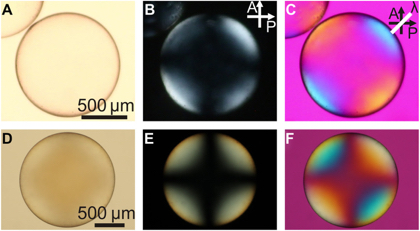
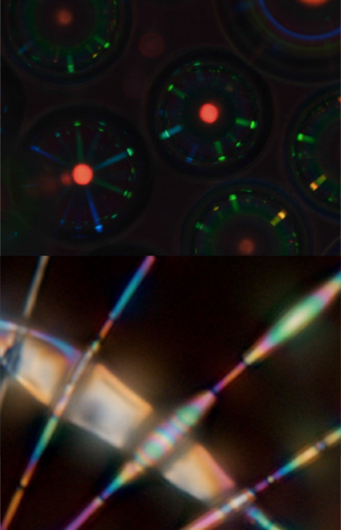
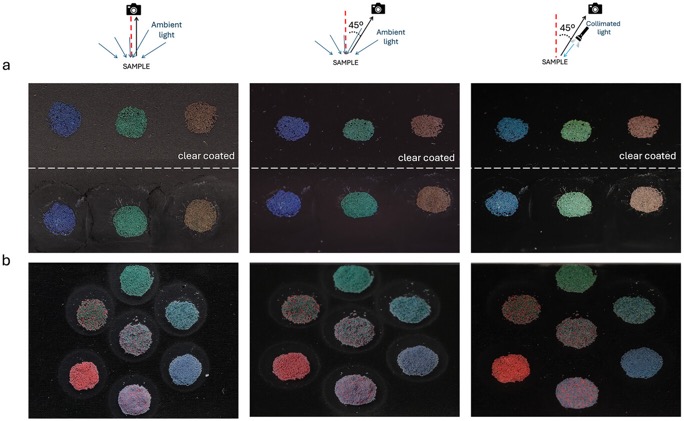
Circularly Polarized Structural Color Pigments Tunable Across the Full Visible Spectrum"! In this work, inspired in part by jewel beetles, Deniz and Jan (though especially Deniz) explore the camouflaging of patterns sensitive to circular polarization by using cholesteric spherical reflectors. By color mixing and dye infusion, they achieved color combinations that are virtually invisible to the unaided eye, but become very apparent when viewed through circular polarizers (like some of the glasses used for watching 3D movies in 3D).
The article is open access and free to read; a great start to 2026.
/LWH/
01 September 2025
It is our pleasure to congratulate three of the newest
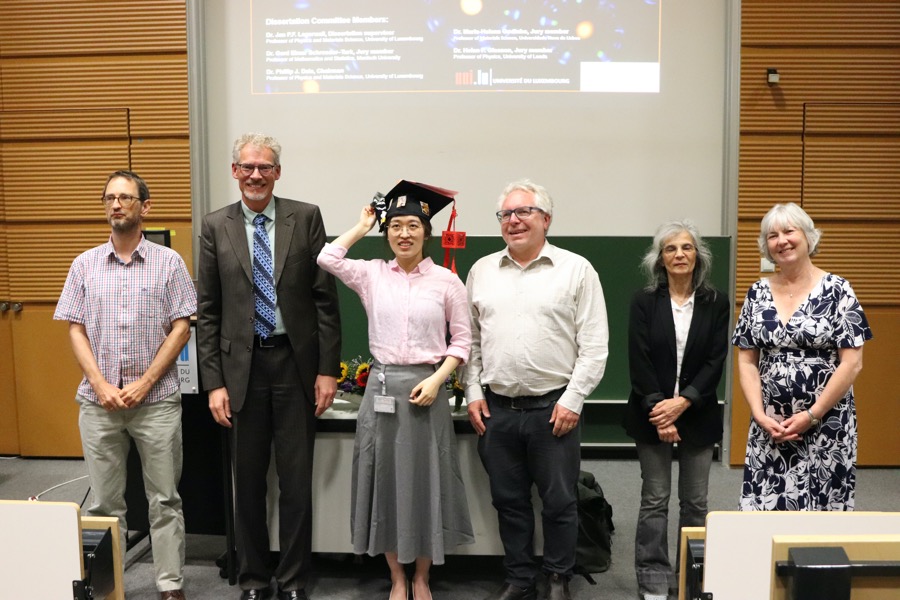
Docteurs de l'Université du Luxembourg! And these defenses all happened in the same very busy last week, so lots of guests to welcome and lots to celebrate.
First up, on 25 August, Xu Ma defended her Ph.D. thesis, "Cholesteric Liquid Crystal Spheres for Visible and Infrared Operation: From Tunable Configurations to Continuous Production".
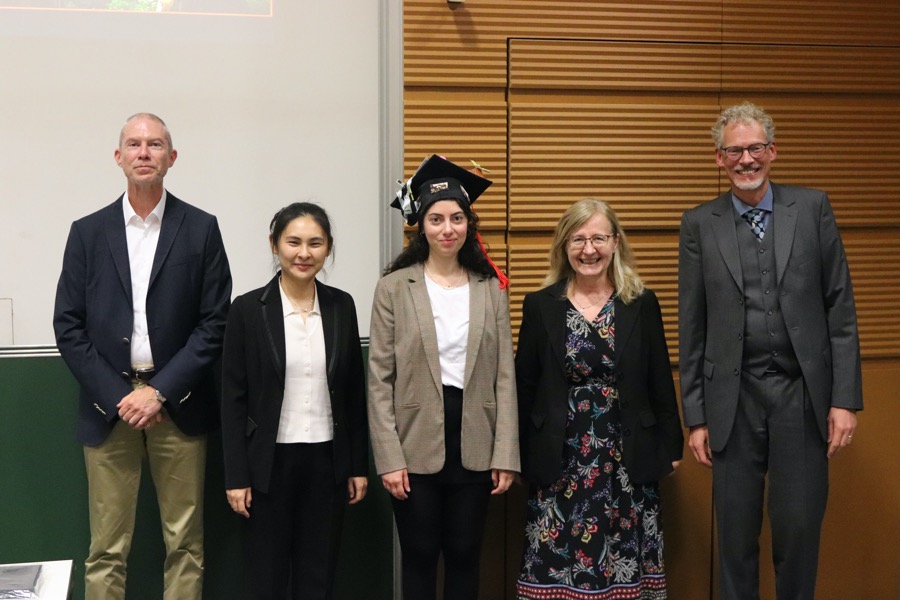
Secondly, on 27 August, Deniz Avşar defended her Ph.D. thesis, "Encoding Information as Unobtrusive Graphical Patterns Using Cholesteric Spherical Reflectors: From Optical and Materials Challenges to Applications in Robotics".
Finally, to round off the week, Nikolay Popov defended his Ph.D. thesis, "Impact of nonionic stabilizers and ionic solutes on liquid crystal shell stability and defect configuration", on Friday, 29 August.
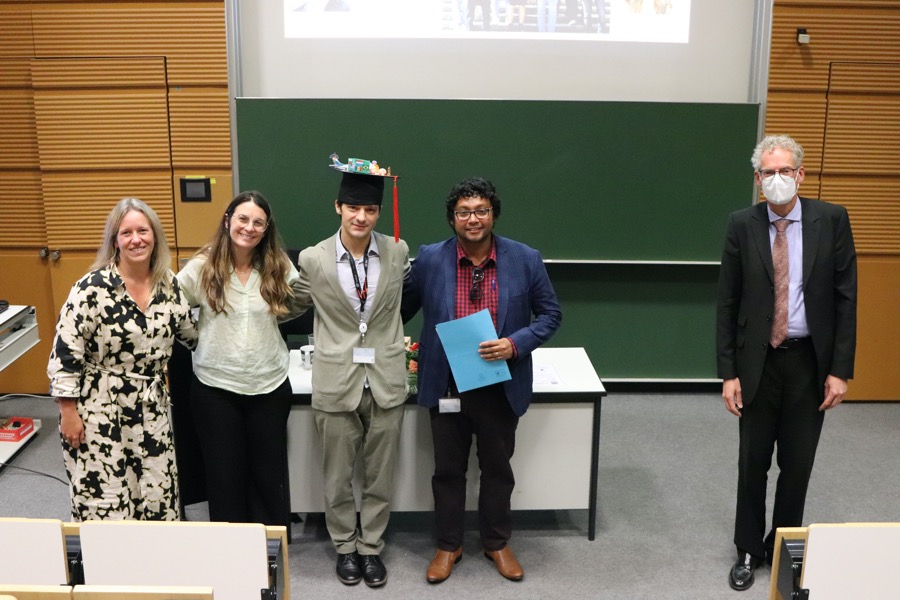
Häerzlech Gléckwonsch fir eis dräi néi Doktoren! / Félicitations à nos trois nouveaux docteurs ! / Congratulations to our three new doctors!
/LWH/
02 July 2025
We're excited to share that the tenth edition of the
Bandol Summer School on Liquid Crystals will be happening 24–30 September in Bandol, France!
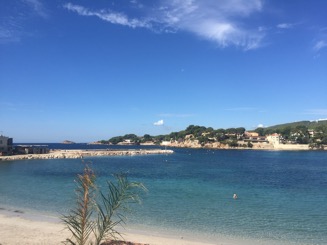
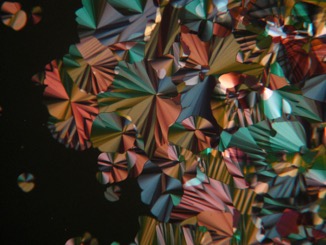
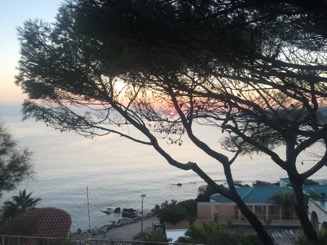
This is a small, intimate, interactive summer school in Bandol, a seaside town on Mediterranean coast of France (between Toulon and Marseille), focusing on many aspects of liquid crystals, from optics and physics to the chemistry of liquid crystals. It is organized by Jan and a number of our collaborators (Giusy Scalia from the University of Luxembourg; Per Rudquist from Chalmers; Sven Lagerwall from the LC Lab Bandol; Johanna Bruckner, Frank Giesselmann, and Stefan Jagiella from the University of Stuttgart; and Daniel Krüerke from Klinikum Arlesheim), a group of researchers who are very passionate about liquid crystals. It's a small summer school, with limited space available, but a great opportunity for learning and enjoying the Côte d'Azur. Despite the timing, the end of September in the south of France can be very pleasant and mild.
For more details, please check the Summer School website. We hope to see some/many of you in Bandol!
/LWH/
24 June 2025
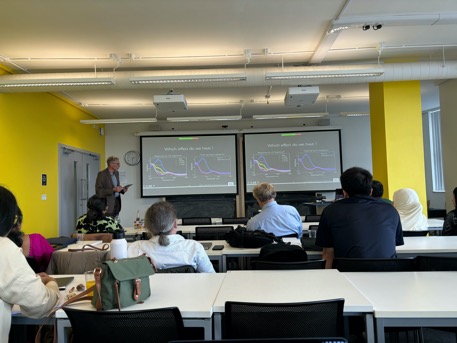
Last week, Jan, Tadej, and Alejandro all presented at the "Isaac Newton Institute Workshop on the Mathematics, Mechanics, and Applications of Soft Matter", hosted by Prof. Apala Majumdar and Dr. Prabakaran Rajamanickam, at the University of Strathclyde in Glasgow. This was a small workshop on many aspects of liquid crystals and soft matter in general: Jan presented some based on our work on liquid crystal elastomers, while Alejandro presented on direct programming of the director in LCE sheets and Tadej presented on acoustic activation of nematic tactoids.
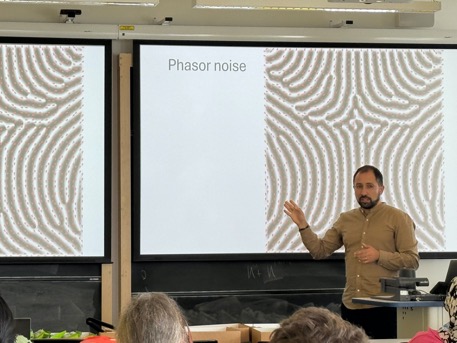
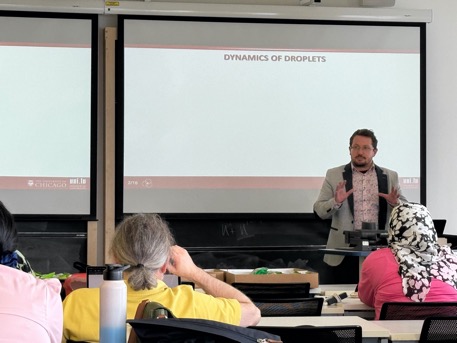
/LWH/
06 June 2025
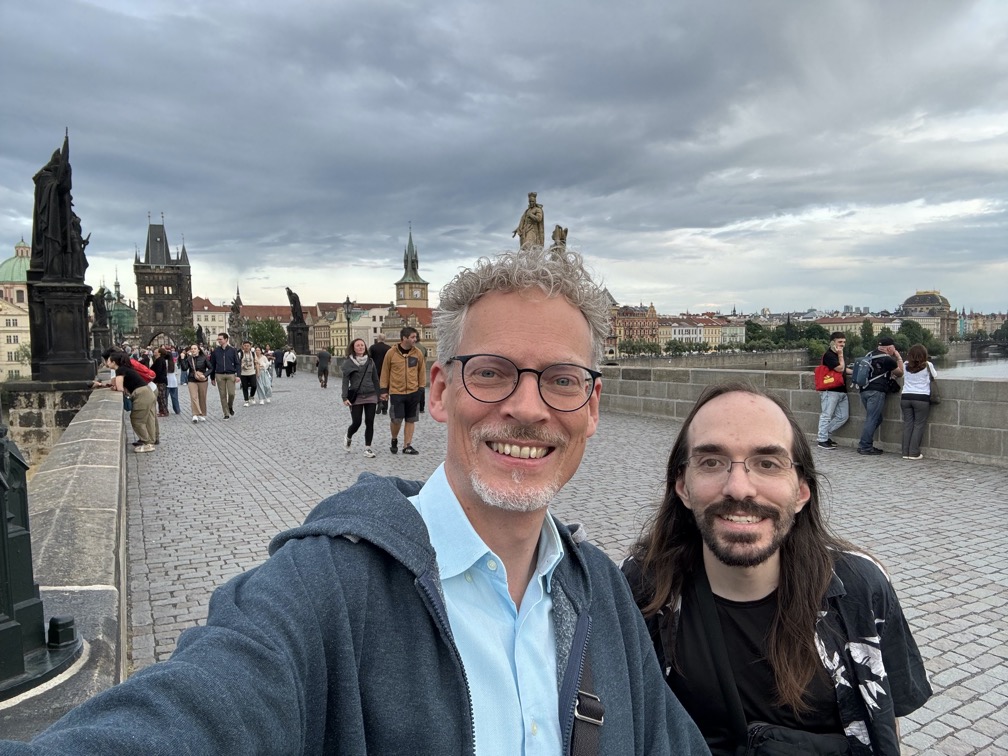
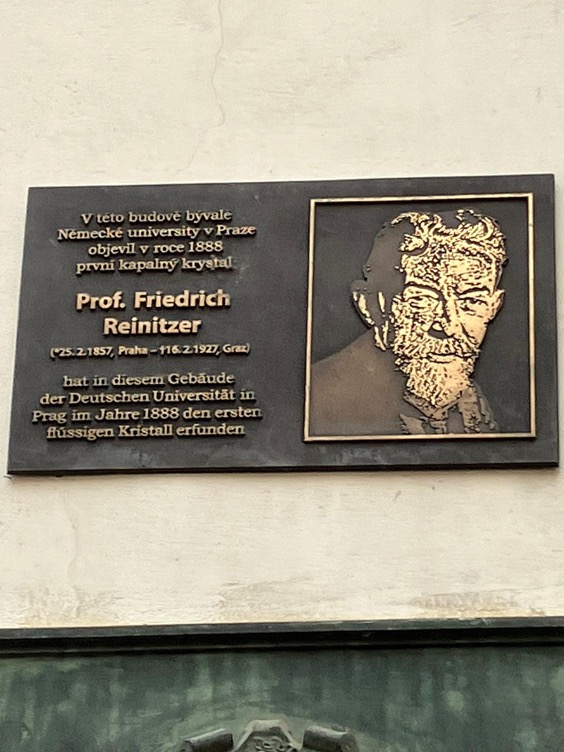
Jan and Larry attended this year's European Liquid Crystal Conference in Prague, hosted by the Czech Academy of Sciences! Jan presented on some of Najiya's and Nikolay's work related to artificial vasculature with liquid crystal elastomer tubes (recently published), while Larry presented on some of his previous work. We also got the chance to explore and enjoy Prague, the place where liquid crystals were first discovered by Friedrich Reinitzer.
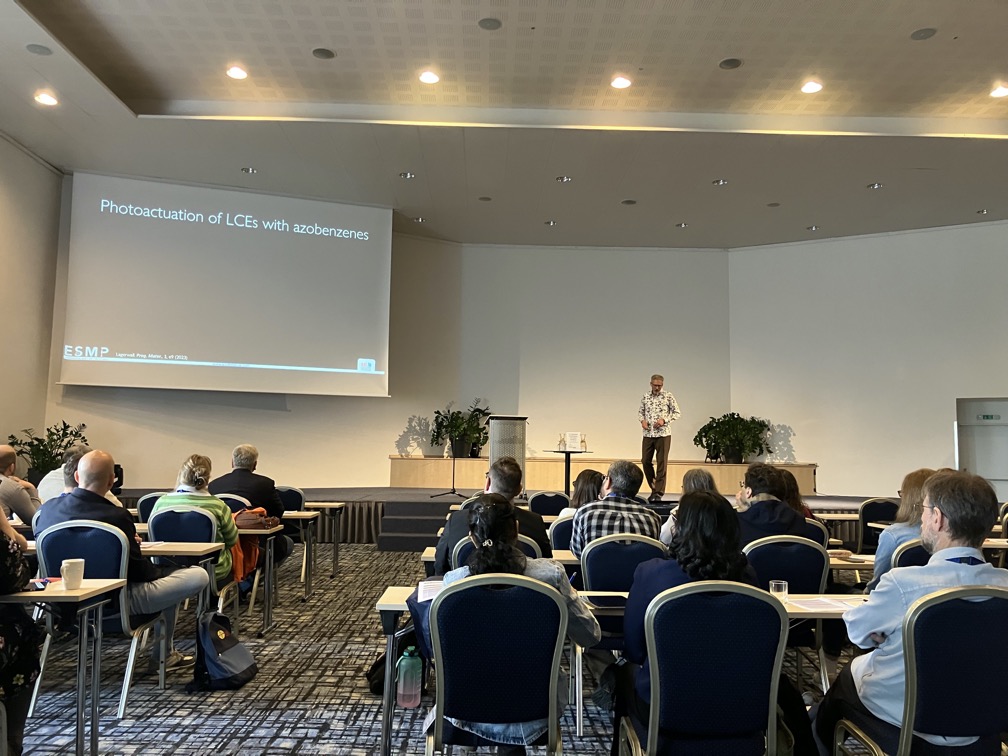
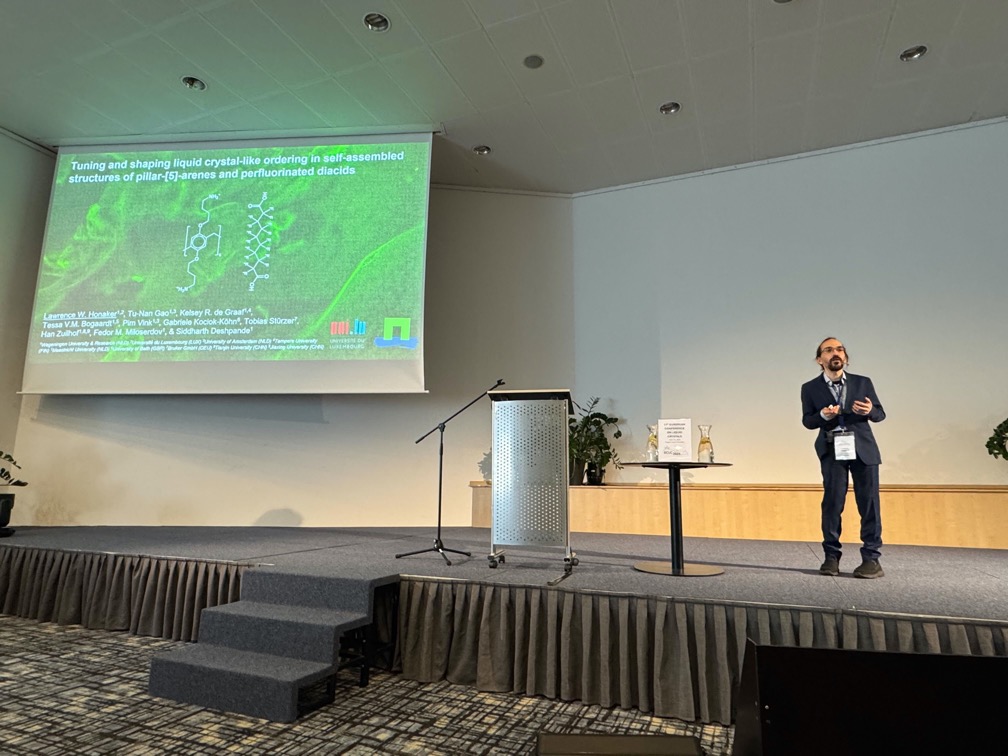
/LWH/
27 March 2025
Congrats to Najiya and Jan for their recent publication, "
Oligomer-Derived Photoresponsive Liquid Crystal Elastomers with Biocompatible Operating Temperature", in
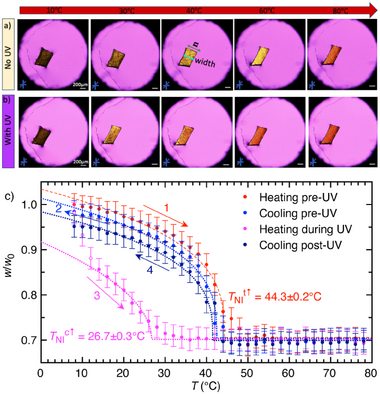
Advanced Optical Materials! In this work, they demonstrate liquid crystal elastomers capable of responding to light at temperatures close to body temperature, a step towards the aim of the ECLECTIC project of producing liquid crystal elastomer actuators for artificial vasculature. Accepted just in time for Najiya's recent PhD defense, it's now finally online for all to see.
\LWH\
26 March 2025
This March, we (Jan and Larry) got the chance to participate for the first time in the 2025
Science Is Wonderful fair hosted by the European Commission at the Koninklijk Museum voor Midden-Afrika (Royal Museum for Central Africa) in Tervuren, Belgium! It was a great opportunity to show students of all ages the beauty of structural color, liquid crystals, and a taste of the research we do in our group.
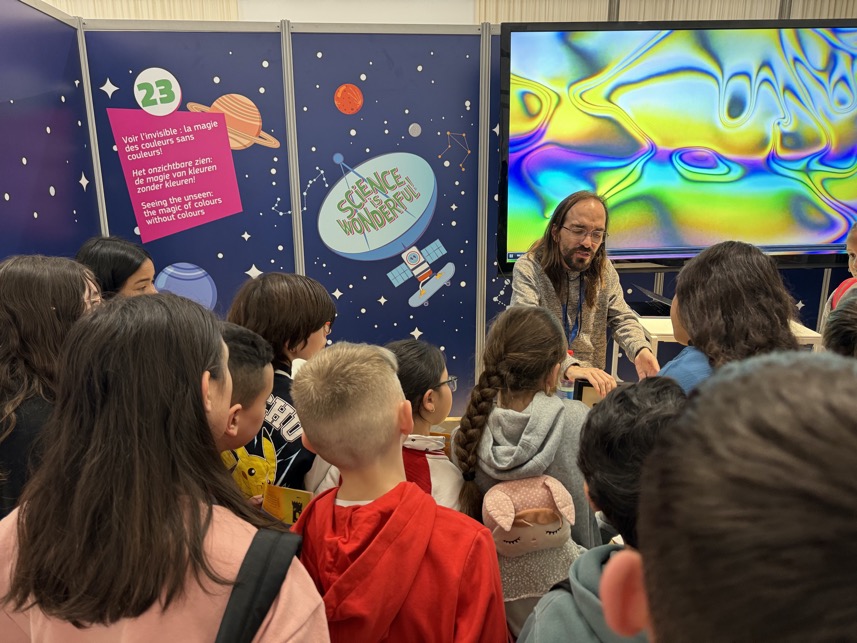
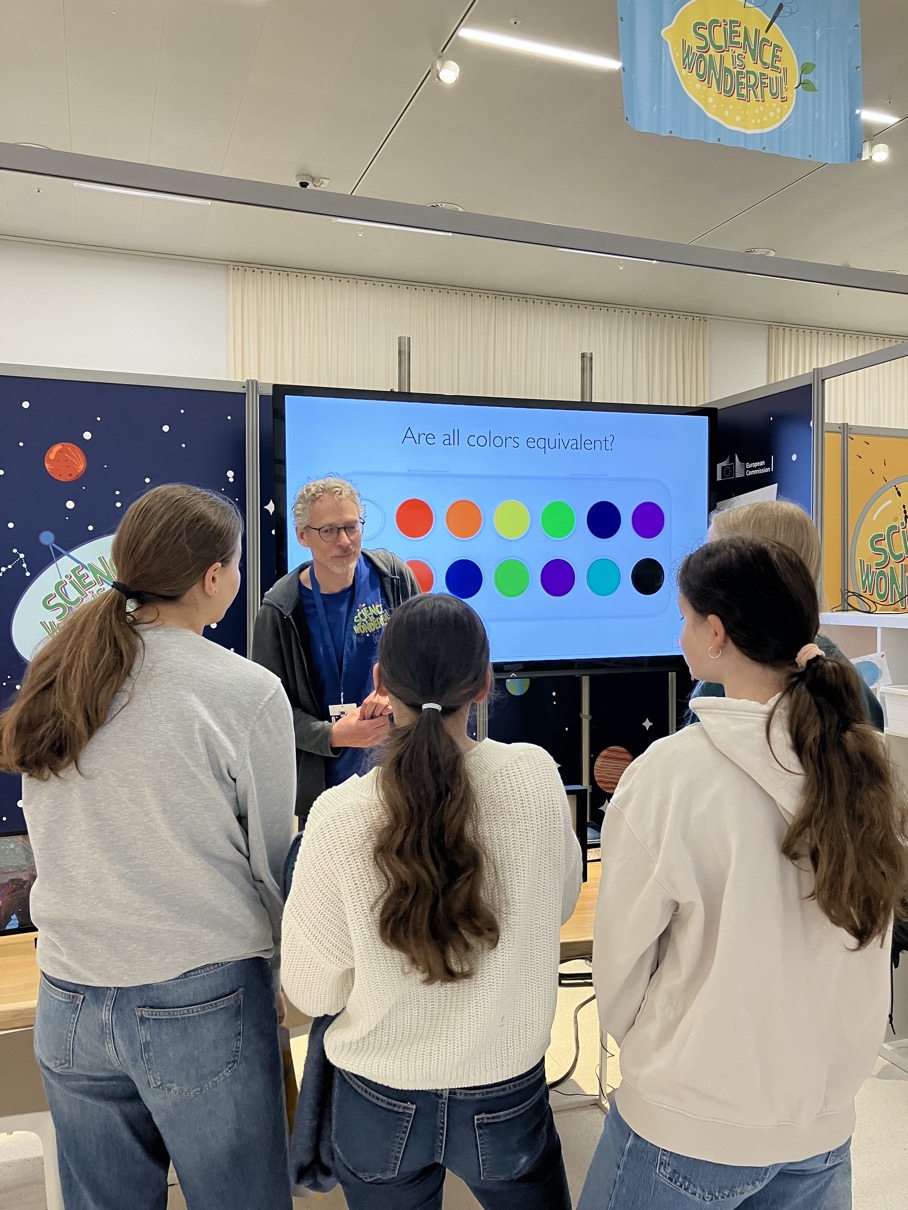
As tired as we are after the event, it was definitely rewarding and exciting, and we're looking forward to the next edition.
\LWH\
04 March 2025
Jan was recently interviewed by Hanna Siemaszko
for the SciLux podcast, in which he discusses how liquid crystals can be used to revolutionize research and technology in many fields and how this ties to our research in ESMP! You can have a listen through the link or through many other podcast providers.

\LWH\
16 December 2024
We are delighted to share that Jan's project BriCE (Novel Concrete
Bridge Spatially-Distributed Monitoring Through
Chromatic Liquid Crystal
Elastomers), a collaboration with Dr. Numa Bertola of the
Sustainable Concrete Structures group at the University of Luxembourg, was just funded by the University of Luxembourg
Institute for Advanced Studies! This four-year project will investigate further use of our mechanochromic liquid crystal elastomers to monitor the structural health of bridges, detecting cracks and failures as early as possible.
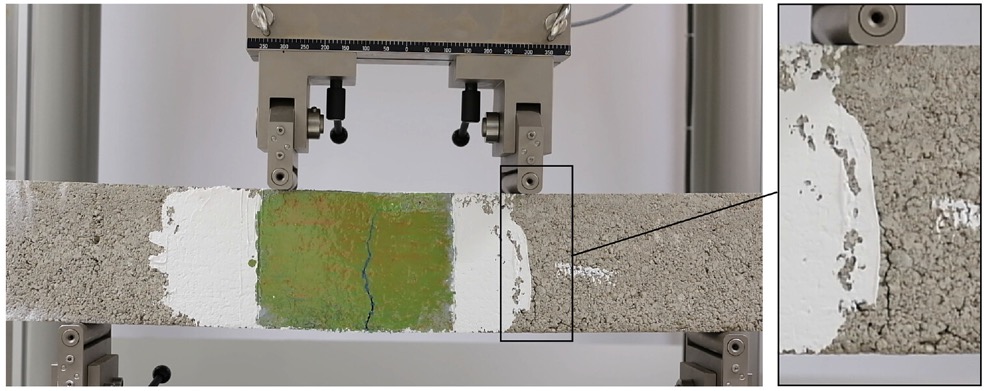
Not from BriCE, but from our recent publication with Danièle Waldmann-Schmidt's group on using mechanochromic LCEs for monitoring crack formation in concrete
Even more good news to end the year; stay tuned for further updates!
\LWH\
11 December 2024
Congratulations to Yansong, Jan, alumni Rijeesh and Hakam, and our collaborators in the Laboratory for Photovoltaics for their recent publication, "Arbitrary and active colouring of solar cells with negligible loss of efficiency", in Energy & Environmental Science! As part of the FNR-funded project LETZCOLOR, this recent work explores the use of polymerized liquid crystals to beautify solar cell panels without any cost to the performance of the panels.
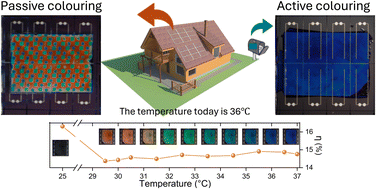
The article is free to access and read; a very nice way to end the year!
\LWH\
29 March 2023
Congrats to our alumni Anjali, Rijeesh and Jan for a
recent paper: Impact of mesogenic aromaticity and cyano termination on the alignment and stability of liquid crystal shells.
\ XM
25 May 2022
Listen Jan talking about CSRs and the CLCEs in a podcast called ''All Things Photonics’'. Jan’s part starts from 23:00.
https://www.photonics.com/Podcast/Ultrashort-Pulse_X-Ray_Sources_and_Laser_Research/pce51?refer=picks
\XM
08 April 2022
Together with Fluigent, Jan will give a talk on: Polymerization of microfluidics-produced liquid crystal double emulsions for making wavelength and polarisation-selective retroreflectors.
Click
here to check the program and register for it.
\XM
31 May 2020
Many congratulations to Catherine and Jan for the new article "
Disruption of electrospinning due to water condensation into the Taylor cone", published in
ACS Applied Materials & Interfaces. This paper has open access.
\AS
03 September 2019
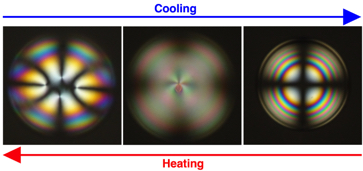
Congratulations to Anjali, Jampani, and Jan on their new article published in Langmuir: "
Realignment of liquid crystal shells driven by temperature-dependent surfactant solubility"This is the study of nematic LC shells stabilized by temperature responsive surfactant. Study shows how one can change the alignment of LC just by varying the temperature. Click
here for the full article.
\AS
29 June 2019
Congratulations to Catherine and Jan on the new publication RSC's Soft Matter:
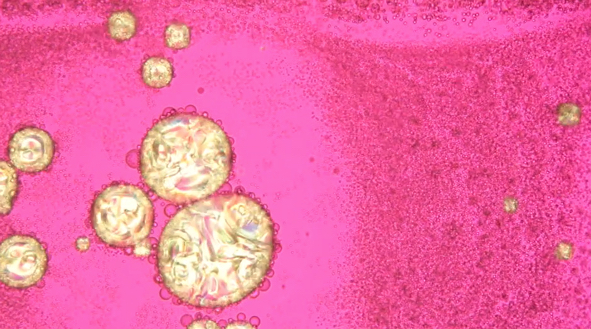
"Isotropic-Isotropic phase separation and spinodal decomposition in liquid crystal-solvent mixtures" experimentally & theoretically reveals evidence of coexisting isotropic phases in simple mixtures of ethanol, 5CB, and water. Even though the nematic LC 5CB is arguably the most studied commercial liquid crystal worldwide, for the first time this study highlights experimental evidence of spinodal decomposition and nucleation and growth occuring between two isotropic phases and a single nematic phase between this common compound and equally common solvents.
(Click the image below to visit the article:
All supplementary info is open access!)
\AS\
19 September 2018
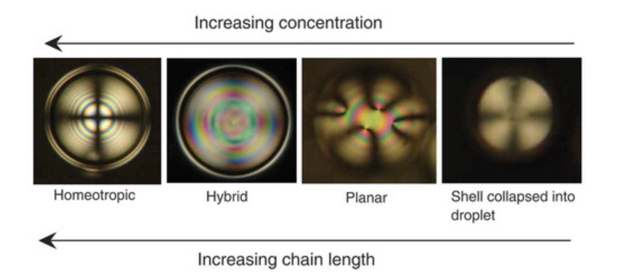
Congratulations to Anjali & Jan on the new publication in Liquid Crystals: "Influence of head group and chain length of surfactants used for stabilising liquid crystal shells"
This is the systematic study of the effect of different surfactants on Nematic LC shell, in terms of stability and alignment.
/AS/
24 May 2018
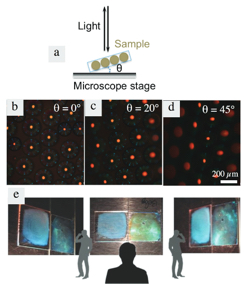
(Click the image above to read the article online, it is Open-Access)
Congratulations to Mat & Jan on the new publication in Advanced Materials: “Cholesteric Liquid Crystal Shells as Enabling Material for Information‐Rich Design and Architecture”!
Mat is a long time collaborator of Jan's since his time as a professor at SNU in South Korea. Some of us in the group got the chance to meet him, but eventually we'll all see each other again in a few days when Mat stops by our lab. Originally an architect by training, Mat worked on (and is probably still working on) many interdisciplinary projects involving robotics, and functional architecture design. He is currently a professor at the New Jersey Institute of Technology.
In this new article Mat, Jan and a few other collaborators at the SNT (Security, Reliability and Trust) Centre in Luxembourg discuss the possibilities of using cholesteric LC shells as sources for information technology in various architecture, drone, and robotics concepts and applications.
/CGR/
19 February 2018
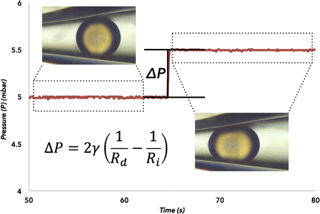
(Click the graphical abstract image above to access the article online, please email either Jan or Rao if you cannot download the pdf file)
Congratulations to Larry & Rao on the publication in Langmuir titled: “Microfluidic Tensiometry Technique for the Characterization of the Interfacial Tension between Immiscible Liquids”!
This is Larry's 1st paper in our group (!) and also Rao's 1st time serving as last author on a paper (!)
In this study, Larry and Rao borrow inspiration from the biologists and use the novel technique of micropipette aspiration (commonly used to measure the viscoelastic properties of living cells) to measure the interfacial tension of 5CB, water, and surfactants with a high degree of accuracy (from the sub-millinewton per meter to several hundred millinewton per meter range) solely from experimental observations of the droplet deformation. This is highly unique as information on the liquid density is not needed to find the interfacial tension.
/CGR/
01 September 2017
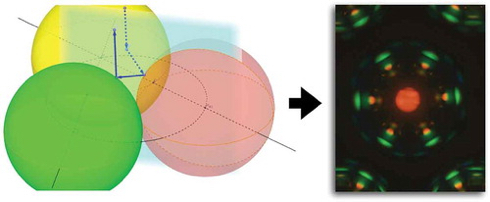
(click the above image to access the article online)
Our fruitful collaboration with Irena Drevensek-Olenik (Ljubljana) and Romano Rupp (Vienna) has resulted in a new article published in Liquid Crystals (special “John Goodby Festschrift” issue). It's also open access!
The paper is entitled “Elucidating the fine details of cholesteric liquid crystal shell reflection patterns” and it combines optical analysis and computer simulations with experimental investigations in the polarizing microscope, allowing a much advanced understanding of the intricate communication patterns arising in collections of short-pitch cholesteric liquid crystal shells, produced using microfluidic techniques. We can now give quantitative information on how the size of the main reflection spot scales with shell size and we explain a number of reflection spots that have previously been ignored. We show that one must consider a certain variation of incidence and reflection angles as well as reflection within the liquid crystal shell in order to explain the patterns. A particularly interesting result is the demonstration and explanation of the first reflection spots that involve communication between three shells: light incident close to the perimeter of one shell can be reflected to an adjacent shell at such an angle that the reflected beam hits a third shell, which then in turn reflects it back to the observer.
/JL/
17 February 2017
The J
ournal of Physics - Condensed Matter by IOP Publishing has just released our groups' newest review article titled
Liquid Crystals in Micron-Scale Droplets, Shells, and Fibers, and it's open access!
(<— Click to check it out)
With careful and succinct discussions of various topics ranging from the characterization of typical liquid crystalline (LC) phases, to the complexities surrounding LC defects under confinement, we're sure that this review will soon become known as one of the "go-to" manuals for both liquid crystal physicists, and chemists; those just beginning in the field, and veteran researchers alike.
In considering the long length of the article, we've carefully sub-sectioned the important works, advancements, and ongoing research contributing to how liquid crystals behave in each of the major curved configurations (i.e. droplets, shells, and fibers). This was done so that anyone interested in knowing more about a particular topic can easily find the right section without having to start reading from the very beginning. At the same time, we include a number of cross-references serving as reminders for the reader to review certain previously described concepts when necessary.
Finally, at the end of each configuration topic we conclude the sections by highlighting the latest research trends which the LC field has shown interest in — for LCs in droplets and shells, it ends with a discussion of active and motile LC systems (inspired by the flocking mechanism in many biological systems) and liquid crystal elastomer (LCE) actuating shells. For LCs in polymer fiber confinement, the section ends with a discussion on textile based gas responsive visual aids, and comparisons to current gas sensing systems.
Here's a brief outline of every section & contents within:
1. Intro
2. The liquid crystalline states of matter [thermotropic nematics & smectics, order parameter, clarification of terminology for LC orientations, LC deformations & elasticity, cholesterics, LC elastomers (LCEs)]
3. Liquid crystal shells and droplets [microfluidics - what it is, how it works for making LC shells & droplets; issues surrounding interface stabilization & LC alignment control within; topological defects for nematic, cholesteric, smectic droplets and shells; droplet & shell LCE actuatiors; active LC droplets & shells]
4. Core-sheath fibers with encapsulated LC [known behaviors of nematics, smectics, cholesterics in silica cylindrical capillaries; electrospinning basics for inserting LCs into polymer cylindrical (and non-cylindrical) fibers; issues surrounding solvent, polymer concentration and molecular weight choices with particular LCs; various LC molar mass types in polymer fibers; LCE fibers and gas sensing applications]
5. Outlook
/CGR/
29 December 2016
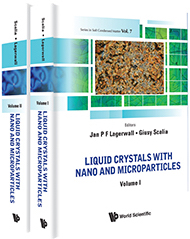
Finally, it's out! After a long process, sometimes with unexpected turns, the book edited by Giusy Scalia and Jan Lagerwall on nano and micro inclusions in liquid crystals, is now published, printed and available for purchase. "
Liquid Crystals with Nano and Microparticles" is published by World Scientific (Singapore) and you can
read all about it (and order it, on paper or as an e-book) here. Featuring the world leaders of this broad field and covering a diverse range of aspects, it ended up filling two volumes. The content is as follows (chapter authors in parentheses):
Volume 1:
1. Introduction (G Scalia and J P F Lagerwall)
I. Fundamentals:
2. A Phenomenological Introduction to Liquid Crystals and Colloids (J P F Lagerwall)
3. Nanoparticle Dispersions: A Colloid and Polymer Solution Perspective (P van der Schoot)
4. Nematic Liquid Crystals Doped with Nanoparticles: Phase Behavior and Dielectric Properties (M A Osipov and M V Gorkunov)
II: Methods for Studying Liquid Crystals and Their Inclusions:
5. Conventional and Nonlinear Optical Microscopy of Liquid Crystal Colloids (T Lee and I I Smalyukh)
6. X-Ray Scattering (G Ungar, Z Chen and X Zeng)
7. Raman Spectroscopy (H F Gleeson)
8. Manipulation of Inclusions with Optical Tweezers (M Skarabot)
9. Atomic Force Microscopy on Liquid Crystals (C Bahr and B Schulz)
III. Micron Scale Inclusions in Liquid Crystals:
10. Solid Microparticles in Nematic Liquid Crystals (Igor Muševič)
11. Inclusions in Freely Suspended Smectic Films (R Stannarius and K Harth)
12. Liquid Crystal-Enabled Electrophoresis and Electro-Osmosis (O D Lavrentovich)
Volume 2:
IV. Nanoparticles in Liquid Crystals:
13. Nanoparticles in Discotic Liquid Crystals (S Kumar)
14. Metallic and Semiconducting Nanoparticles in LCs (A Sharma, M Urbanski, T Moria, H-S Kitzerow and T Hegmann)
15. Inorganic Nanotubes and Nanorods in Liquid Crystals (I Drevenšek-Olenik)
16. Liquid Crystals from Mesogens Containing Gold Nanoparticles (W Lewandowski and E Gorecka)
17. Carbon Nanotubes in Thermotropic Low Molar Mass Liquid Crystals (S Schymura, J Park, I Dierking and G Scalia)
18. Carbon Nanotubes Dispersed in Liquid Crystal Elastomers (Y Yang and Y Ji)
19. Ferromagnetic and Ferroelectric Nanoparticles in Liquid Crystals (Y Reznikov, A Glushchenko and Y Garbovskiy)
20. Nanoparticle Guests in Lyotropic Liquid Crystals (S Dölle, J H Park, S Schymura, Hyeran Jo, G Scalia and J P F Lagerwall)
21. Control of Nanoparticle Self-Assemblies Using Distorted Liquid Crystals (E Lacaze and D Coursault)
22. Nanoparticles and Networks Created Within Liquid Crystals (S-W Kang and S Kundu)
Liquid Crystals Formed by Nanoparticle Suspensions:
23. Nematic Phase Formation in Suspensions of Carbon Nanotubes (C Zakri and Ph Poulin)
24. Nematic Phase Formation in Suspensions of Graphene Oxide (N Fresneau and S Campidelli)
25. Electro-Optical Switching of Liquid Crystals of Graphene Oxide (J Song)
26. Liquid Crystalline Phases in Suspensions of Pigments in Non-Polar Solvent (S Klein, R Richardson and A Eremin)
27. Cholesteric Liquid Crystal Formation in Suspensions of Cellulose Nanocrystals (C Honorato-Rios, J Bruckner, C Schütz, S Wagner, Z Tosheva, L Bergström and J P F Lagerwall) 06 August 2016
Congrats to Catherine and Anshul, whose paper on non-electronic toluene vapor sensing using electrospun PVP fibers filled with nematic 5CB liquid crystal is now
available (Open Access) from the
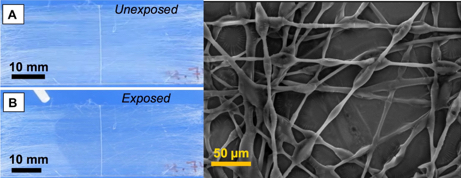
Liquid Crystals website. In the article they demonstrate that there are two types of response to toluene vapor exposure, one slow and one fast. The slow one corresponds to a toluene diffusion-induced clearing transition, whereas the fast one is connected to a change in liquid crystal director field configuration, but the 5CB remains in the nematic phase. This fast response is seen across the mat within a fraction of a second, even several centimeters away from the exposure point, indicating that the detection threshold is very low. They also show that the responses of uniformly cylindrical fibers and beaded fibers are quite different, the latter allowing detection by the naked eye, without polarizers.
Download the paper (no subscription needed) here.
23 December 2015
Just in time for Christmas,
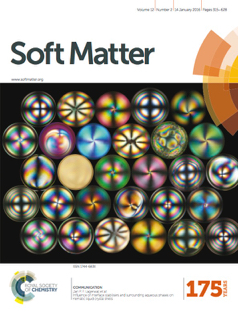
JungHyun's beautiful collection of liquid crystal shells got to decorate the
cover of issue 2 of volume 12 of Soft Matter. Her article "
Influence of interface stabilisers and surrounding aqueous phases on nematic liquid crystal shells", written together with
Kevin and
Jan, appears on page 367 of this issue. Congratulations on your second journal cover, JungHyun!
27 November 2015
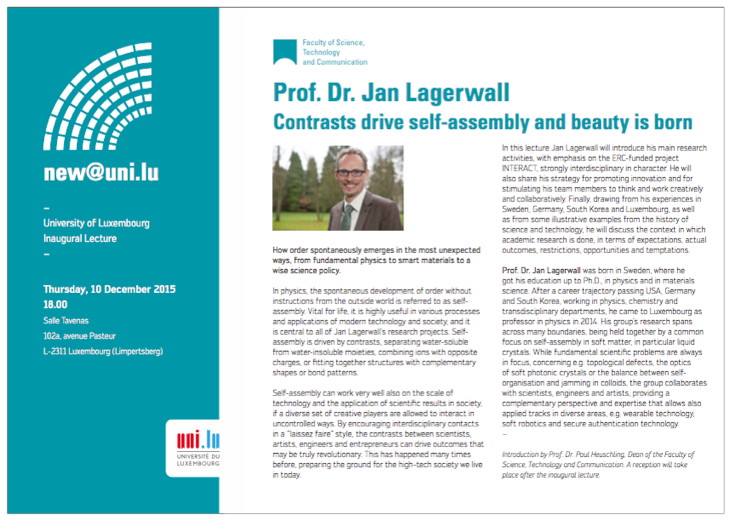
With a slight delay, it is finally time on Thursday 10th of December for Jan to give his inaugural lecture at University of Luxembourg, entitled
Contrasts drive self-assembly and beauty is born. This is a popular scientific lecture open to the public, and it will span a broad spectrum, from giving some fascinating glimpses of the research we do in the group to discussing the benefits of cross-fertilizing fundamental and applied research, taking an open-minded and interdisciplinary attitude.
The lecture will take place in
Salle Tavernas, Campus Limpertsberg (the old monastery on 102 Avenue Pasteur) at 18:00. You are most welcome!
14 June 2015
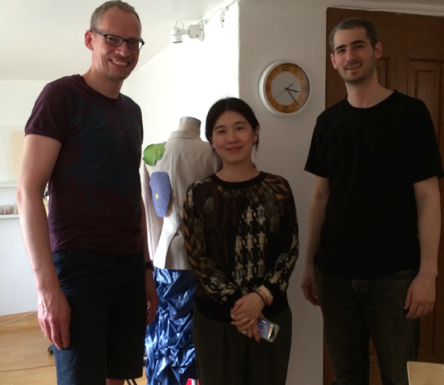
In connection to Jan's trip to Korea for YooMee's defense, he took the opportunity to visit wearable technology artist Younghui Kim (Hongik University) and robotics artist/designer Mathew Schwartz (Advanced Institute of Convergence Technologies) to discuss their collaboration within the framework of Jan's ERC project INTERACT. Here the three are gathered in Younghui's fantastic studio in Seoul, surrounded by her artwork.
13 March 2015
On the 12th of March 2015 the European Research Council (ERC)
publicized the list of this year's Consolidator Grant winners, making it official that Jan's proposal INTERACT was selected for support. The support means that for the next five years the Experimental Soft Matter Physics group will be working very actively on wearable technology, soft robotics and innovative techniques for secure authentication. As the project gets going (current projected starting date is 1st of April 2015) there will be many updates.
15 February 2015
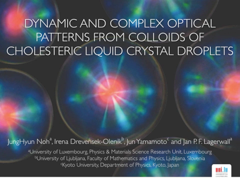
On Tuesday 10th of February 2015, Jan gave an invited talk entitled “Dynamic and complex optical patterns from colloids of cholesteric liquid crystal droplets” at the SPIE meeting in San Francisco, in the session “Emerging Liquid Crystal Technologies X”. You can
watch the screen recording of the talk (you see the slides and hear the voice) here.
26 March 2014
At the 2014 German Liquid Crystal Conference in Magdeburg Jan was invited to deliver the honorary Vorländervorlesung. The title of his presentation, which contained some quite general reflections about our current research situation, was "With an open attitude, new doors open".
01 March 2014
Since March 1st 2014 the “Soft Nano- and Microstructures Group” at Seoul National University ceased to exist and it is replaced by the “Experimental Soft Matter Physics” group at the
University of Luxembourg, where Jan since this date is full professor in physics, at the
Physics & Materials Science Research Unit. This web site will eventually be updated to reflect the new situation and the changes it will entail. Our current main research foci (on functional composite fibers produced by electrospinning; on liquid crystalline shells [low molar mass and elastomeric]; and on liquid crystalline self-assembly of cellulose nanocrystals) will remain and we are still very interested in transdisciplinary research, although there will be an increased focus on physics with more room for fundamental research than what the situation in Korea allowed.