28 May 2026
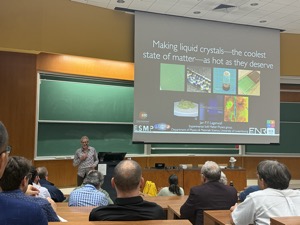
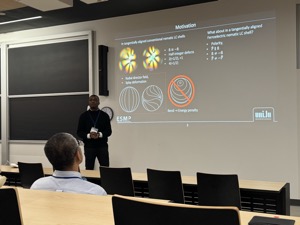
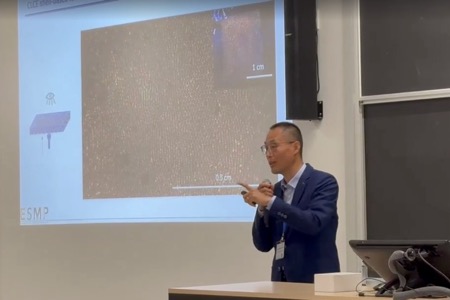
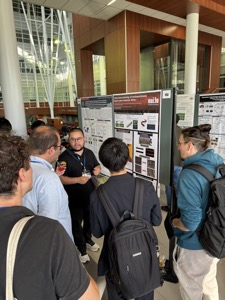
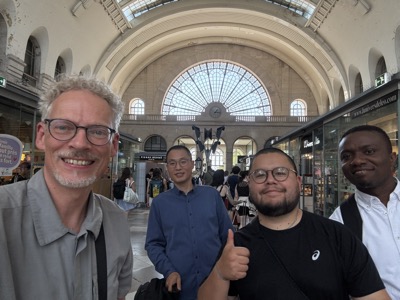
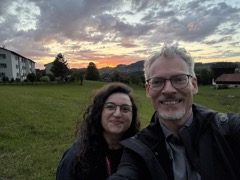
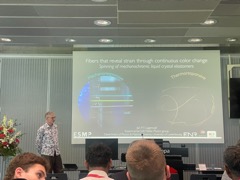
This past week, Jan and Amina attended this year's Fiber Society conference at EMPA in St. Gallen, Switzerland! Jan presented on some of our work on mechanochromic liquid crystal elastomers while both Jan and Amina enjoyed networking and the beautiful surroundings of northeastern Switzerland.
/LWH/
19 January 2026
With the new year, it is our pleasure to now welcome two new ESMP postdocs and a new visiting scientist: Yvonne Zagzag, Amina Alizade, and Mónica Arenas Correa!
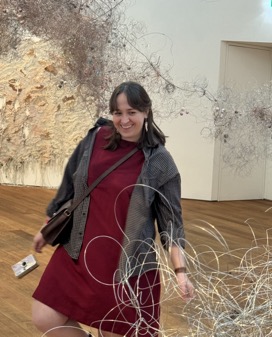
Yvonne is a recently graduated Physics Ph.D. who joins us from Prof. Chinedum Osuji's group at the University of Pennsylvania. She joins us within the ALCEMIST project as a postdoc working at the intersection of theory and experiments, combining her theoretical knowhow with the many experiments in the project (and especially on fluid flow).
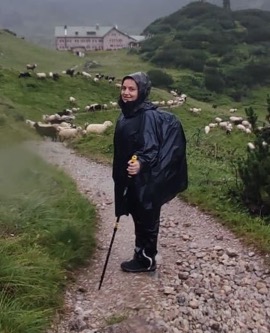
Originally from Georgia (the country), Amina joins us after her Ph.D. research in the group of Dr. Anne Jantschke at the Johannes Gutenberg University of Mainz, Germany, where she worked with cellulose extracted from dinoflagellates. Her role will be as the main chemist on the ALCEMIST project, working to develop the chemical tools and protocols to create cellulose-based liquid crystal elastomeric materials.
Mónica is the CEO of our spin-off company Trace Crystal and has joined ESMP in the framework of an FNR Industrial Fellowship as a visiting scientist to work further on developing the technology fueling the innovations at the company. (Hakam will still be with us, but in a different role.)
Häerzlech Wëllkomm!
/LWH/
18 December 2025
This past week, we had the pleasure of welcoming
Prof. Chinedum Osuji from the University of Pennsylvania to Luxembourg for a colloquium! Not only did we get to hear about the fascinating active matter research happening in his group, but we were able to show him a bit of what we do here at ESMP as well as around Luxembourg.
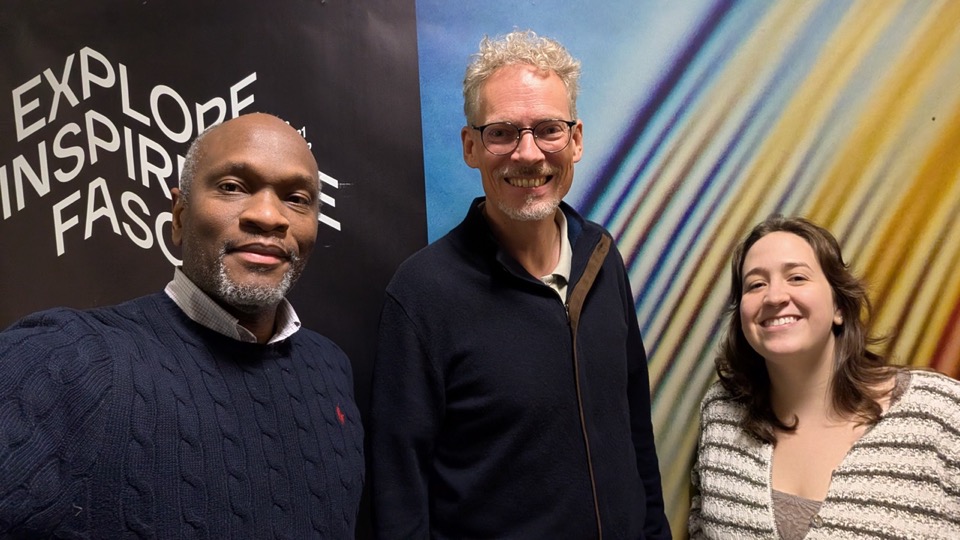
By a happy coincidence, though, one of Prof. Osuji's recently graduated Ph.D. students, Yvonne Zagzag, will be officially joining ESMP in the New Year and was already in Luxembourg, so we had the chance to welcome them both! While Prof. Osuji has already left, we are definitely looking forward to working with Yvonne (more details to come).
/LWH/
17 November 2025
In continuing with the ALCEMIST hirings and the launch of the project, it is our pleasure to welcome Dr. Tatiana Avsievich, a new postdoc on the ALCEMIST project!
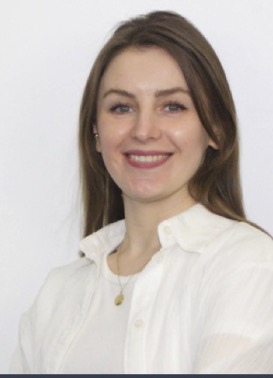
Tatiana comes to us after doing her Ph.D. and taking on a postdoctoral position at the University of Oulu, Finland, where she worked on biological microfluidics and pushing the limits of 3D printing and soft lithography for biological applications. She will be bringing her expertise in microfluidics and soft matter instrumentation to us here at ESMP to work on studying the flow behavior and properties of cellulose-based liquid crystal elastomers.
/LWH/
24 June 2025
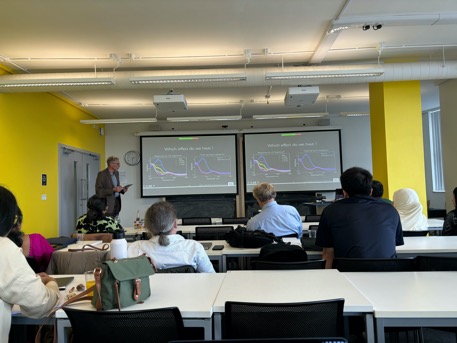
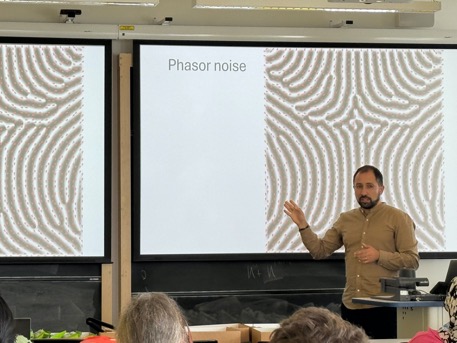
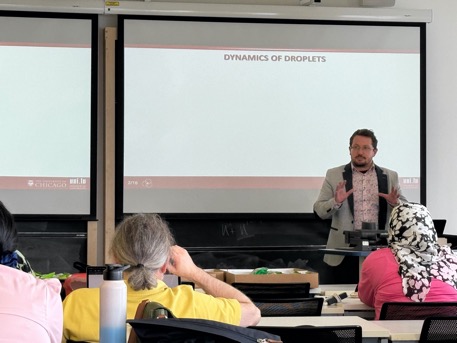
Last week, Jan, Tadej, and Alejandro all presented at the "Isaac Newton Institute Workshop on the Mathematics, Mechanics, and Applications of Soft Matter", hosted by Prof. Apala Majumdar and Dr. Prabakaran Rajamanickam, at the University of Strathclyde in Glasgow. This was a small workshop on many aspects of liquid crystals and soft matter in general: Jan presented some based on our work on liquid crystal elastomers, while Alejandro presented on direct programming of the director in LCE sheets and Tadej presented on acoustic activation of nematic tactoids.
/LWH/
06 June 2025
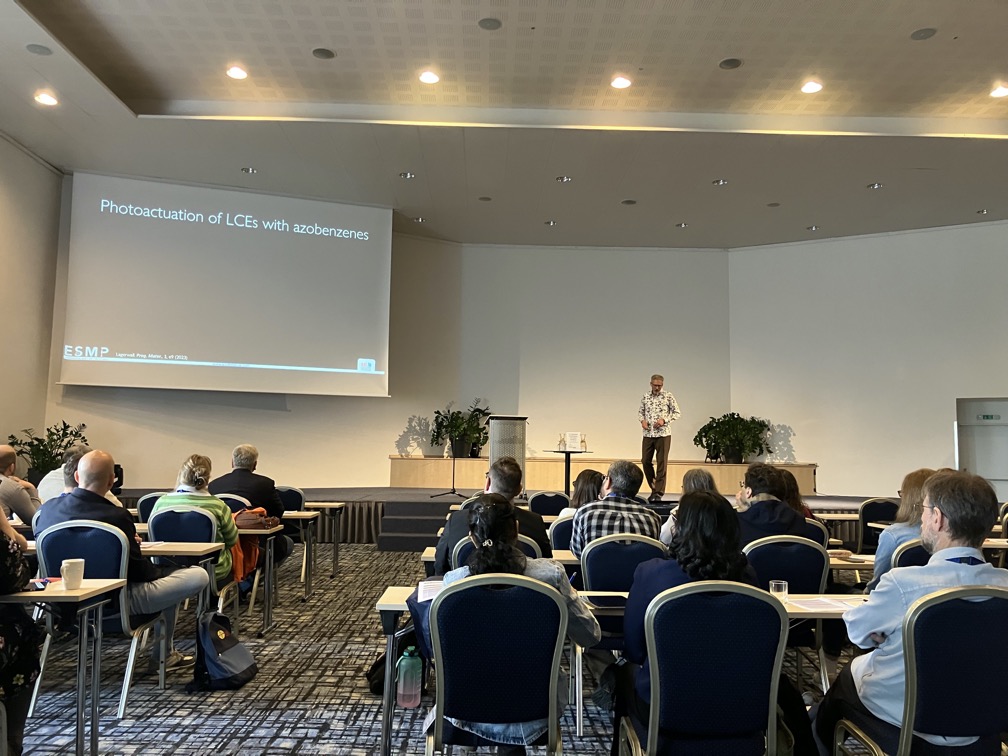
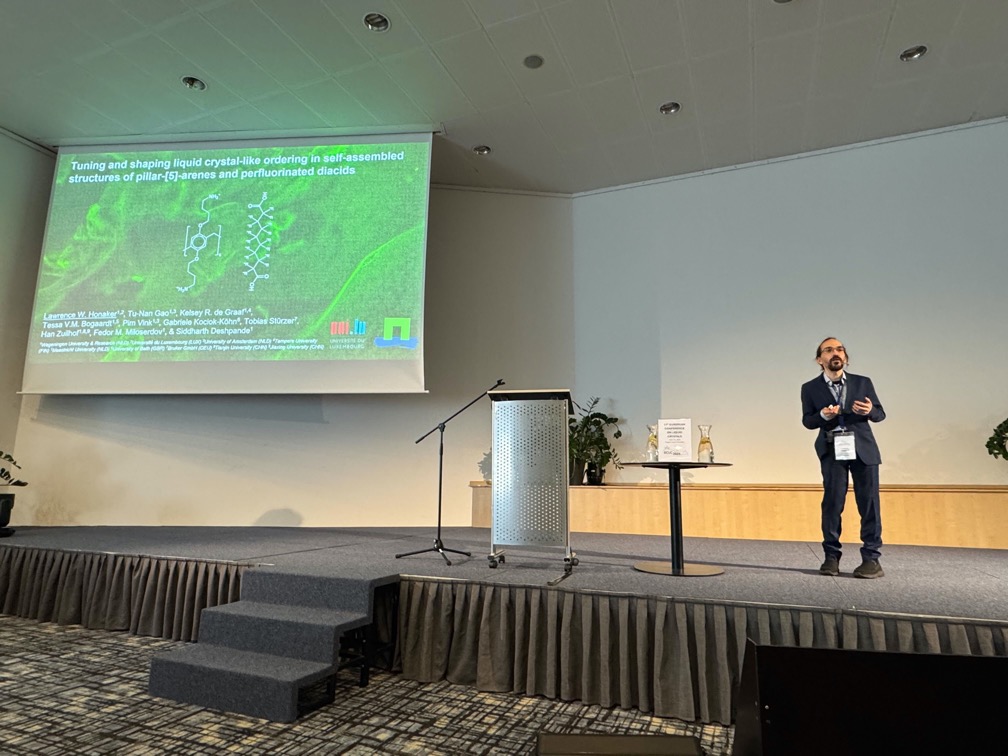
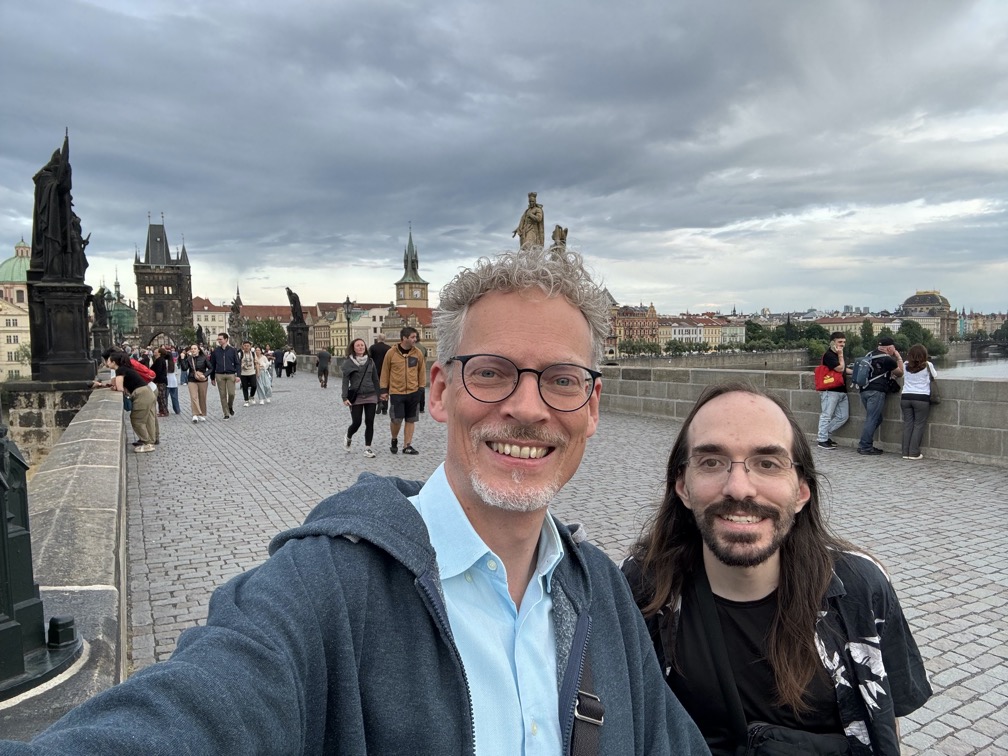
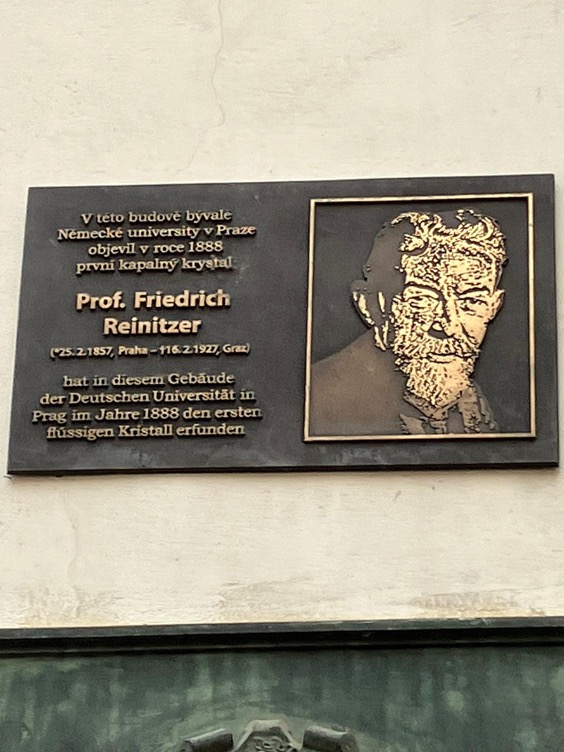
Jan and Larry attended this year's European Liquid Crystal Conference in Prague, hosted by the Czech Academy of Sciences! Jan presented on some of Najiya's and Nikolay's work related to artificial vasculature with liquid crystal elastomer tubes (recently published), while Larry presented on some of his previous work. We also got the chance to explore and enjoy Prague, the place where liquid crystals were first discovered by Friedrich Reinitzer.
/LWH/
02 June 2025
It is our pleasure to welcome back Rijeesh Kizhakidathazhath (approx. "kee-rah-kee-dah-tah-ra-tuh") to the ESMP group!

Originally from Kerala, India, Rijeesh did his Ph.D. in Life Science at Hokkaido University in Japan before moving to Kyushu University for a postdoc. He first came to ESMP in 2018, stayed with us for five years, then moved to the group of Arri Priimägi at Tampere University in Finland. He has returned to Luxembourg to work on many of our chemistry-heavy projects, such as BriCE, ALCEMIST, and COSAMOS, with a focus on polymerizable liquid crystals for sensing and detection purposes.
Rebienvenue, Rijeesh!
\LWH\
26 March 2025
This March, we (Jan and Larry) got the chance to participate for the first time in the 2025
Science Is Wonderful fair hosted by the European Commission at the Koninklijk Museum voor Midden-Afrika (Royal Museum for Central Africa) in Tervuren, Belgium! It was a great opportunity to show students of all ages the beauty of structural color, liquid crystals, and a taste of the research we do in our group.
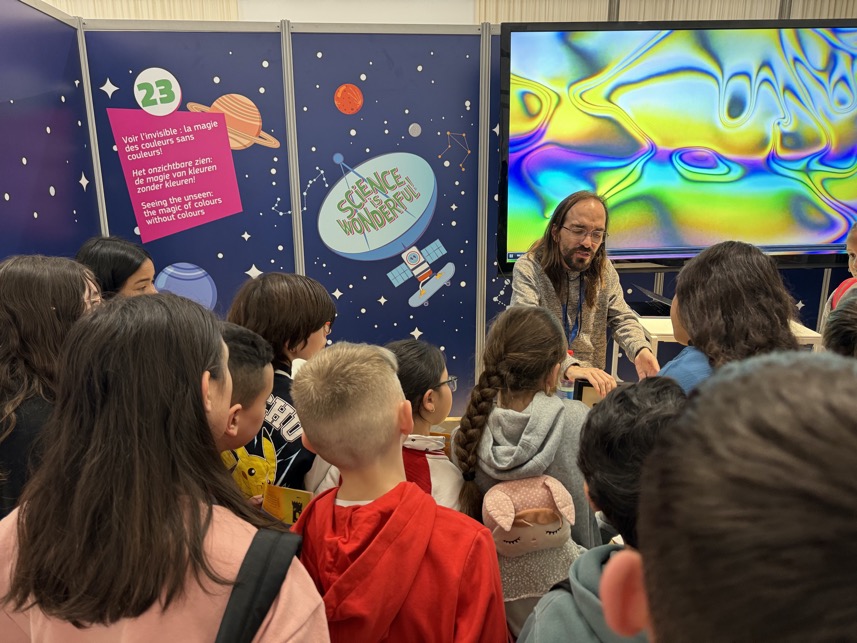
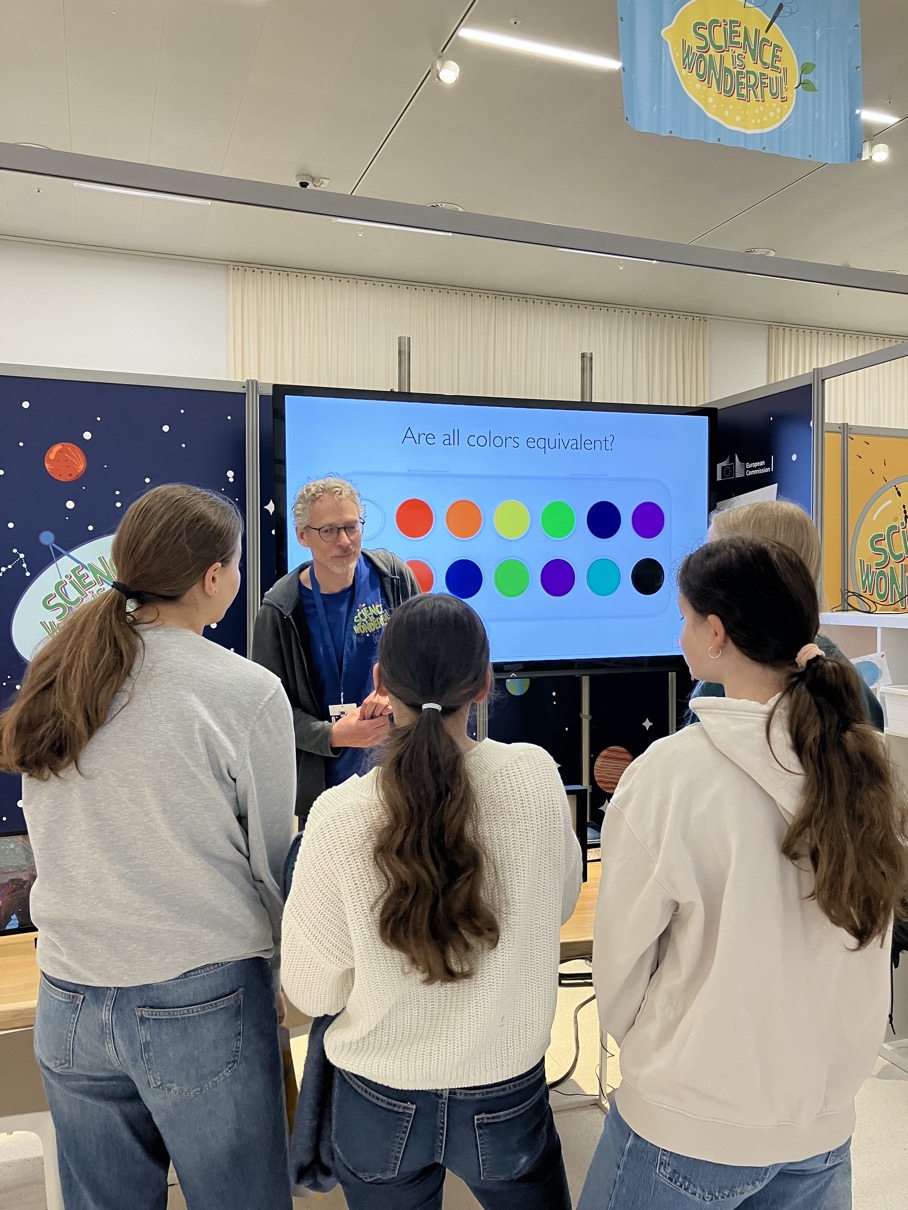
As tired as we are after the event, it was definitely rewarding and exciting, and we're looking forward to the next edition.
\LWH\
17 March 2025
It is our pleasure to welcome our latest ESMP group members, Dr. Chih-Chieh Chien and Dr. Vijaykumar (Vijay) Varma!
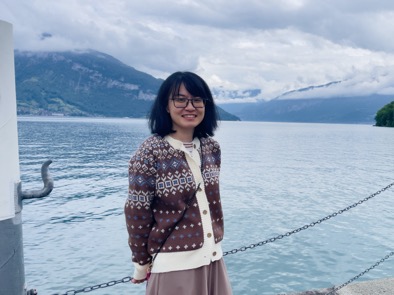
Originally from Taiwan, where she did her Ph.D., Chih-Chieh will be working on the BIOFLICS project to improve biological sensing with functionalized liquid crystal droplets. She will be taking over Yansong's role, as Yansong will be moving more towards working with Phil Dale's Laboratory for Energy Materials on the LETZCOLOR project.
After doing his Master's in India and his Ph.D. in Singapore, Vijay comes to us from a previous position at the Luxembourg Institute of Science and Technology. He's the first hire on the ALCEMIST project, in which he'll be working on the next generation of sustainable liquid crystal oligomers and elastomers derived from cellulose.
\LWH\
03 February 2025
As our first post for 2025, it is our pleasure to welcome our newest group members, Dr. Tadej Emeršič and Mr. Churchill Agoni, to ESMP!
Originally from Slovenia, where he completed his Ph.D., Tadej comes to us from the University of Chicago, where he worked as a postdoc in the group of Juan de Pablo. He joins us on the INVISIMARK project, a project in cooperation with the Luxembourg Ministry of Defense, in which he'll be working with us for (at least) the next year and a half on the use of CSRs for secure identification purposes.
Churchill comes from Nigeria and joins us after his Master's studies in Photonics at the University of Eastern Finland in Joensuu. He'll be working on the SHADOW project, a collaboration with the University of Ljubljana, on studying ferroelectric nematic liquid crystals under confinement.
\LWH\
11 December 2024
Congratulations to Yansong, Jan, alumni Rijeesh and Hakam, and our collaborators in the Laboratory for Photovoltaics for their recent publication, "Arbitrary and active colouring of solar cells with negligible loss of efficiency", in Energy & Environmental Science! As part of the FNR-funded project LETZCOLOR, this recent work explores the use of polymerized liquid crystals to beautify solar cell panels without any cost to the performance of the panels.
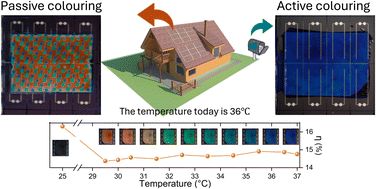
The article is free to access and read; a very nice way to end the year!
\LWH\
21 August 2024
Welcome Alejandro (left) and welcome back Larry (right)
This August we have two postdocs join us.
Alejandro will work on the LiCER (Liquid-crystal Elastomer Robotics) project, which aims to design and develop an instrumented actuator from liquid crystal elastomers to build an endoscope soft robot.
Larry did his Ph.D. in our group. After 4 years postdoc stay at Wageningen University & Research, he return to ESMP to work on the Marie Sklodowska-Curie Action-funded project TECHSTILE, working to create wearable technology incorporating liquid crystal and liquid armor functionality.
\XM
19 January 2022
Welcome to Yansong
Yansong is a materials researcher specialised in light-responded elastomers and self-organizing polymer networks. He received his Master and PhD degree in chemical engineering from National Cheng Kung University in Taiwan. After that he did three-years post-doc in Prof. Chia-Rong Lee’s group in the department of photonics at same university to develop smart actuators, liquid crystal laser and planar optics. He attempts to synthesis anisotropic polymers with new functionalities and integrate them into optical devices to meet industrial and societal challenges. In January 2022 he became a member of ESMP and is working on to electrospinning fibers and Cholesteric Spherical Reflectors to make innovative pathogen sampling filters and reporters of biomolecular binding events.
\XM
04 December 2020
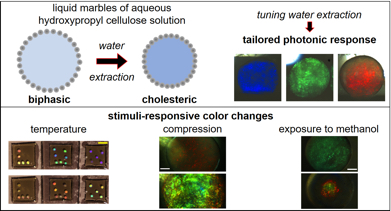
A very simple and informative explanation of colours. Listen Manos Anyfas talking about the recent paper in a podcast called ''All Things Photonics’'. Manos’s part starts from 36:45.
https://photonics.com/Podcast/Ian_Walmsley_Unlocking_a_Quantum_Advantage/pce25
Here is the original article:
Responsive Photonic Liquid Marbles https://onlinelibrary.wiley.com/doi/10.1002/anie.202008210#.X8fZL0vRKyY.twitter
\AS
31 May 2020
Many congratulations to Catherine and Jan for the new article "
Disruption of electrospinning due to water condensation into the Taylor cone", published in
ACS Applied Materials & Interfaces. This paper has open access.
\AS
03 September 2019
Congratulations to Anjali, Jampani, and Jan on their new article published in Langmuir: "
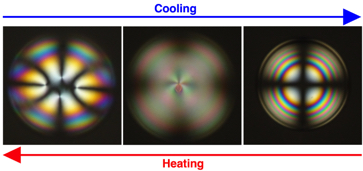
Realignment of liquid crystal shells driven by temperature-dependent surfactant solubility"This is the study of nematic LC shells stabilized by temperature responsive surfactant. Study shows how one can change the alignment of LC just by varying the temperature. Click
here for the full article.
\AS
29 June 2019
Congratulations to Catherine and Jan on the new publication RSC's Soft Matter:
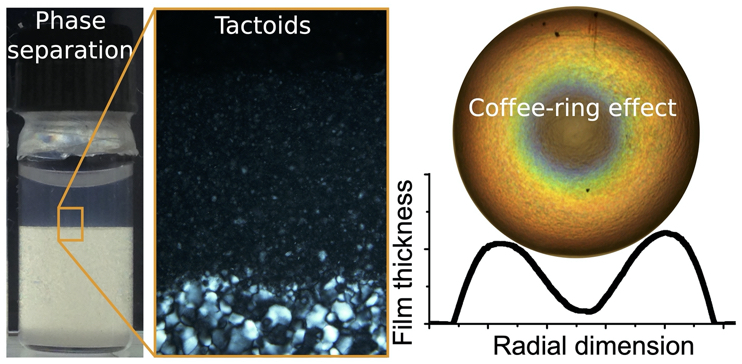
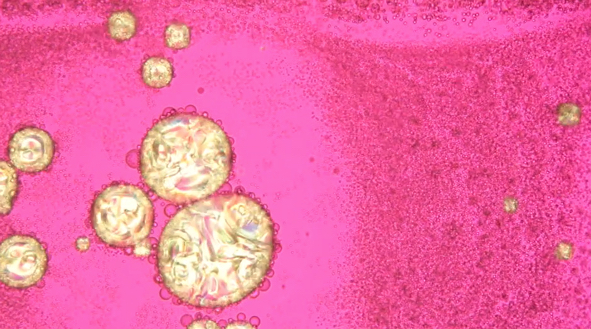
"Isotropic-Isotropic phase separation and spinodal decomposition in liquid crystal-solvent mixtures" experimentally & theoretically reveals evidence of coexisting isotropic phases in simple mixtures of ethanol, 5CB, and water. Even though the nematic LC 5CB is arguably the most studied commercial liquid crystal worldwide, for the first time this study highlights experimental evidence of spinodal decomposition and nucleation and growth occuring between two isotropic phases and a single nematic phase between this common compound and equally common solvents.
(Click the image below to visit the article:
All supplementary info is open access!)
\AS\
02 June 2019
Yong, our previous postdoc, has returned to conduct further research on applying the LC shells we make in lab to solving practical issues with security authentication.
His project is in collaboration with Prof. Gabriele Lenzini from the SNT (Interdisciplinary Center for Security, Reliability and Trust) & is funded by the FNR (the Luxembourg National Research Fund).
The project is called "SSH: Security in the Shell", more details can be found
here \AS
13 September 2018
. .

Welcome to our new post-doc Rijeesh (left) and phd Nikolay (right) who have joined our team. Rijeesh will be working on making cholesteric LC shells for reflector tags. While Nikolay will aim to generate tube-shaped liquid crystal elastomer actuators for biomedical applications.
/AS/
01 September 2017
(click the above image to access the article online)
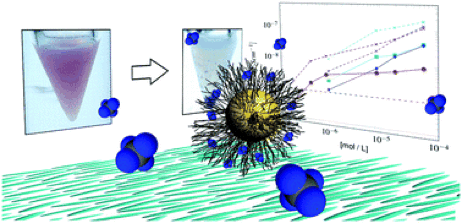
Congratulations to Martin on the publication in J. Mater. Chem. C of his dielectric spectroscopy study “Why organically functionalized nanoparticles increase the electrical conductivity of nematic liquid crystal dispersions”!
This paper gives a first systematic study of how and why nanoparticle doping raises the electrical conductivity of thermotropic liquid crystals like the commonly studied 5CB. By a careful analysis of the dielectric spectra, he shows that the hydrodynamic radius of the ionic charge carrier is much smaller than the nanoparticles, ruling out the particles themselves as the source of conductivity. The ligand molecules are also not the reason, as is demonstrated by strong sonication of the dispersions, such that the ligands detached from the nanoparticles. While this causes nanoparticle aggregation and the loss of suspension stability, the effect on conductivity is negligible. The ligand shell is, however, partially responsible, because the ions giving rise to the conductivity increase are most likely remnants from the ligand-functionalized nanoparticle synthesis process. We propose that these ions are brought in with the ligand shell when the particles are dispersed in the 5CB. Interestingly, the ions appear not to be released in an isotropic and aromatic solvent such as toluene, which is often the host for commercial gold nanoparticle suspensions, but 5CB is an ideal host for their dissolution. The aliphatic ligand shell has a higher compatibility with 5CB than with toluene, thanks to the alkyl tail of 5CB, and at the same time the high polarity of the 5CB (due to the cyano group) allows better ion dissolution than in regular hexane. Finally, the nematic order of the 5CB solvent provides an anisotropic environment in which the ligands are stretched out preferentially along the director, making release of ligand-bound ions to the solvent more likely.
/JL/
01 September 2017
(click the above image to access the article online)
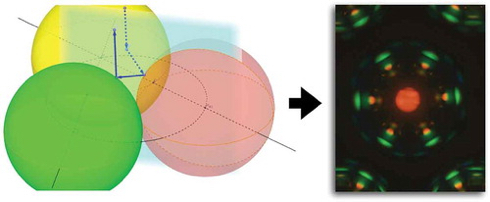
Our fruitful collaboration with Irena Drevensek-Olenik (Ljubljana) and Romano Rupp (Vienna) has resulted in a new article published in Liquid Crystals (special “John Goodby Festschrift” issue). It's also open access!
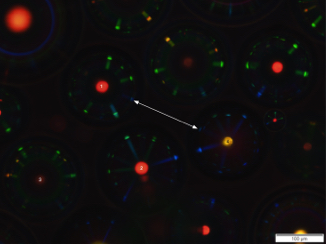
The paper is entitled “Elucidating the fine details of cholesteric liquid crystal shell reflection patterns” and it combines optical analysis and computer simulations with experimental investigations in the polarizing microscope, allowing a much advanced understanding of the intricate communication patterns arising in collections of short-pitch cholesteric liquid crystal shells, produced using microfluidic techniques. We can now give quantitative information on how the size of the main reflection spot scales with shell size and we explain a number of reflection spots that have previously been ignored. We show that one must consider a certain variation of incidence and reflection angles as well as reflection within the liquid crystal shell in order to explain the patterns. A particularly interesting result is the demonstration and explanation of the first reflection spots that involve communication between three shells: light incident close to the perimeter of one shell can be reflected to an adjacent shell at such an angle that the reflected beam hits a third shell, which then in turn reflects it back to the observer.
/JL/
11 July 2017
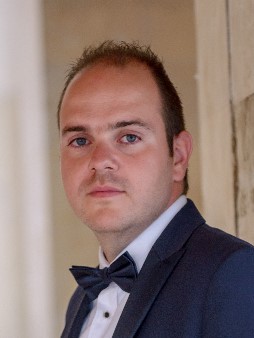
We're happy to welcome our new post-doc: Manos Anyfantakis! He officially joined the ESMP team at the start of July, and will mainly be working on advancing projects related to hydrodynamic flows, kinetic arrest, LC structure formation in the CNC work we have happening. He received his masters applied molecular spectroscopy in 2007, earned a phd in chemistry in Greece in 2010, and has since travelled to Germany and France for postdocs on the wetting of surfactant solutions and optofluidics phenomena before finally joining us in Luxembourg. You can contact Manos via e-mail here.
/CGR/
17 February 2017
The J
ournal of Physics - Condensed Matter by IOP Publishing has just released our groups' newest review article titled
Liquid Crystals in Micron-Scale Droplets, Shells, and Fibers, and it's open access!
(<— Click to check it out)
With careful and succinct discussions of various topics ranging from the characterization of typical liquid crystalline (LC) phases, to the complexities surrounding LC defects under confinement, we're sure that this review will soon become known as one of the "go-to" manuals for both liquid crystal physicists, and chemists; those just beginning in the field, and veteran researchers alike.
In considering the long length of the article, we've carefully sub-sectioned the important works, advancements, and ongoing research contributing to how liquid crystals behave in each of the major curved configurations (i.e. droplets, shells, and fibers). This was done so that anyone interested in knowing more about a particular topic can easily find the right section without having to start reading from the very beginning. At the same time, we include a number of cross-references serving as reminders for the reader to review certain previously described concepts when necessary.
Finally, at the end of each configuration topic we conclude the sections by highlighting the latest research trends which the LC field has shown interest in — for LCs in droplets and shells, it ends with a discussion of active and motile LC systems (inspired by the flocking mechanism in many biological systems) and liquid crystal elastomer (LCE) actuating shells. For LCs in polymer fiber confinement, the section ends with a discussion on textile based gas responsive visual aids, and comparisons to current gas sensing systems.
Here's a brief outline of every section & contents within:
1. Intro
2. The liquid crystalline states of matter [thermotropic nematics & smectics, order parameter, clarification of terminology for LC orientations, LC deformations & elasticity, cholesterics, LC elastomers (LCEs)]
3. Liquid crystal shells and droplets [microfluidics - what it is, how it works for making LC shells & droplets; issues surrounding interface stabilization & LC alignment control within; topological defects for nematic, cholesteric, smectic droplets and shells; droplet & shell LCE actuatiors; active LC droplets & shells]
4. Core-sheath fibers with encapsulated LC [known behaviors of nematics, smectics, cholesterics in silica cylindrical capillaries; electrospinning basics for inserting LCs into polymer cylindrical (and non-cylindrical) fibers; issues surrounding solvent, polymer concentration and molecular weight choices with particular LCs; various LC molar mass types in polymer fibers; LCE fibers and gas sensing applications]
5. Outlook
/CGR/
16 February 2017
We're happy to welcome our new post-doc:
Christina Schütz! She officially joined the
ESMP team at the start of February, and will mainly be working with Camila on advancing projects related to CNC work. She received her master's from Martin-Luther-University Halle-Wittenberg in Germany (the same place where Jan did his habilitation thesis!), and then her PhD in materials chemistry from Stockholm University. Christina joins us for her 2nd post-doc, after spending a year at Wim Thielemans' lab in KU Leuven, Belgium. Happy to have another chemist joining us!
/CGR/
15 December 2016
We have the great pleasure of welcoming Dr. Hakam Agha into the
ESMP team. He will be working as a post-doc with us and with the LC Nano group of Giusy Scalia for at least six months, hopefully more. He got his Ph.D. in physics from the University of Strasbourg and was most recently working as post-doc with Christian Bahr and Stefan Herminghaus at the Max Planck Institute for Dynamics and Self-Organization in Göttingen.
Welcome!!
17 September 2016
Congratulations to Johanna and co-authors for the publication in Langmuir of the article "
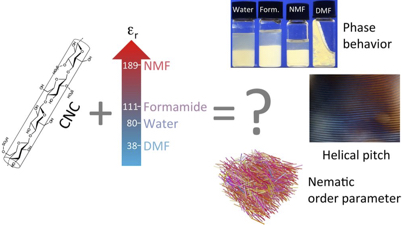
Enhancing Self-Assembly in Cellulose Nanocrystal Suspensions Using High-Permittivity Solvents". The team studied dispersion of Cellulose Nanocrystals (CNC) and the associated liquid crystal formation in water and in non-aqueous but polar solvents. Johanna developed a new method for exchanging the solvent of CNC suspensions from the water used during synthesis to formamide, N-methylformamide (NMF) and N,N-dimethylformamide (DMF), without inducing aggregation of the nanorods. She found striking differences between the solvents concerning the liquid crystal formation. The four solvents span a large range of dielectric permittivity, a parameter that turns out to be of key importance. The cholesteric helical superstructure develops much faster in high-permittivity NMF than in water and the pitch depends much less on CNC concentration than when water is the solvent. In low-permittivity DMF the first trace of liquid crystal formation coincides with kinetic arrest of the whole sample, preventing any helix formation since an equilibrium liquid crystal phase never develops. We propose that this is due to aligned aggregation of the CNC nanorods. The experimental results are corroborated by computer simulations done in Tanja Schilling's group, which furthermore indicate that the nematic order parameter goes up for high-permittivity solvents.
If you have an institutional subscription to Langmuir, you can
download the article here. If you do not, you can try the following link:
http://pubsdc3.acs.org/articlesonrequest/AOR-uVuBGBqpFzkXHmtihG36 . The first 50 to try this link can download the article for free, regardless of subscription.
We regret that the published Acknowledgments section unfortunately did not mention that Rick Dannert is a member of the Laboratory for the Physics of Advanced Materials of the University of Luxembourg and that this group kindly made their equipment (AFM, rheometer and refractometer) available for some of the experiments described in the paper. We deeply apologize for having forgotten this information in the published paper. Here we would like to express our deep gratitude for the support from the Laboratory for the Physics of Advanced Materials. 06 August 2016
Congrats to Catherine and Anshul, whose paper on non-electronic toluene vapor sensing using electrospun PVP fibers filled with nematic 5CB liquid crystal is now
available (Open Access) from the
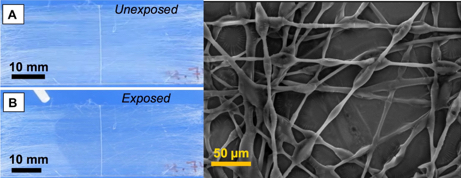
Liquid Crystals website. In the article they demonstrate that there are two types of response to toluene vapor exposure, one slow and one fast. The slow one corresponds to a toluene diffusion-induced clearing transition, whereas the fast one is connected to a change in liquid crystal director field configuration, but the 5CB remains in the nematic phase. This fast response is seen across the mat within a fraction of a second, even several centimeters away from the exposure point, indicating that the detection threshold is very low. They also show that the responses of uniformly cylindrical fibers and beaded fibers are quite different, the latter allowing detection by the naked eye, without polarizers.
Download the paper (no subscription needed) here.
30 May 2016
Congrats to Yong on the
publication of his cholesteric microshells study in the journal Scientific Reports (Nature Publishing Group)! Together with JungHyun he succeeded in preparing shells from different cholesteric liquid crystal mixtures, giving selective reflection in different color ranges. He has developed a new method to rapidly remove defects by annealing through osmosis, and then he polymerizes a fraction of the mixture that is sufficient to make the shells robust under considerable mechanical deformation. With the help of our collaborators Romano Rupp (University of Vienna) and Irena Drevensek-Olenik (University of Ljubljana) we analyze the complex optics of the photonic cross communication between the shells, finding that the communication is active even between shells with different reflection colors, opening up new communication channels (picture). Finally, our collaborator at the Interdisciplinary Center for Security and Trust (SnT) at the University of Luxembourg, Dr. Gabriele Lenzini, provides a thorough and critical discussion on how the patterns generated by the shells may be used in secure authentication. The paper is Open Access, so please
download and read it at http://www.nature.com/articles/srep26840 (and make sure to check the nice movies in the Supporting Information!).
05 April 2016
We wish Dr. Johanna Bruckner best of luck for the next stage of her career, which will be at Bosch in Stuttgart, Germany. During her post-doc with us from August 2015 until the end of March 2016 she has done fantastic work on suspensions of cellulose nanocrystals in non-aqueous solvents (publications are on their way...) and she has been a wonderful group member. We will all miss her very much, but we are happy that she will surely meet exciting new challenges at her next work place.
28 March 2016
Congratulations to Johanna Bruckner, who was awarded the German Liquid Crystal Society's best poster award at the joint conference of the British and German liquid crystal societies, in Edinburgh, UK, 21-23rd of March 2016. The poster, entitled "Solvent effects on chiral nematic self‐assembly of cellulose nanocrystals" (co-authors Camila Honorator-Rios and Jan Lagerwall), describes the behavior of cellulose nanocrystal suspensions in non-aqueous but polar solvents, as well as a new method of exchanging the solvent without inducing aggregation of the rods. A publication is on the way...
30 July 2015
We have the fortune to welcome Dr. Johanna Bruckner in our team. Johanna recently defended her Ph.D., carried out under the supervision of Frank Gießelmann, at the University of Stuttgart, and she secured a fellowship from the Dr. Leni Schöninger Stiftung for doing a six-month post-doc with us in Luxembourg. She will be working on liquid crystalline suspensions of cellulose nanocrystals (CNC) in various solvents. In doing so, she will be working closely with our other CNC researchers, in particular Camila, who is the Ph.D. candidate in the MISONANCE project.
01 July 2015
It is our great pleasure to welcome Yong Geng to our group as a post-doc. After obtaining his Ph.D. with Prof. Maria Helena Godinho in Lisbon he worked as a post-doc with Prof. Ralf Stannarius and Dr. Alexey Eremin in Magdeburg, before he came to Luxembourg. He will be working on colloidal crystals of cholesteric shells, produced in a microfluidic set-up, focusing on the optical properties and the pattern formation of these systems. This research is the core of the interdisciplinary dual-PI project UNIQUE, funded by University of Luxembourg. The second partner of the project is the team around Gabriele Lenzini and Peter Ryan at the UL's Interdisciplinary Center for Security and Trust, which will analyze the patterns generated by the colloids from an information content point of view. Young will thus interact closely with Samir Ouchani, a post-doc in computer science working under the guidance of Gabriele.